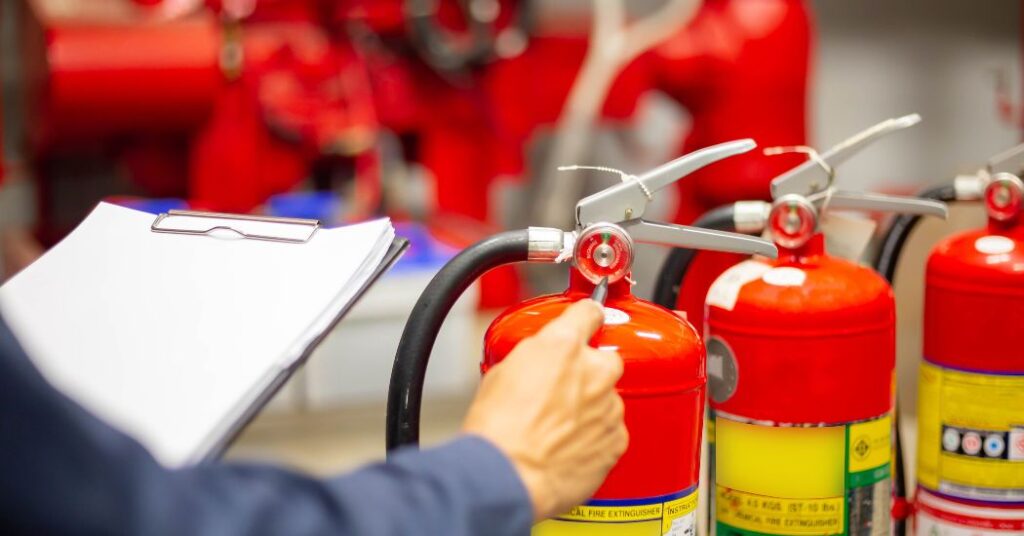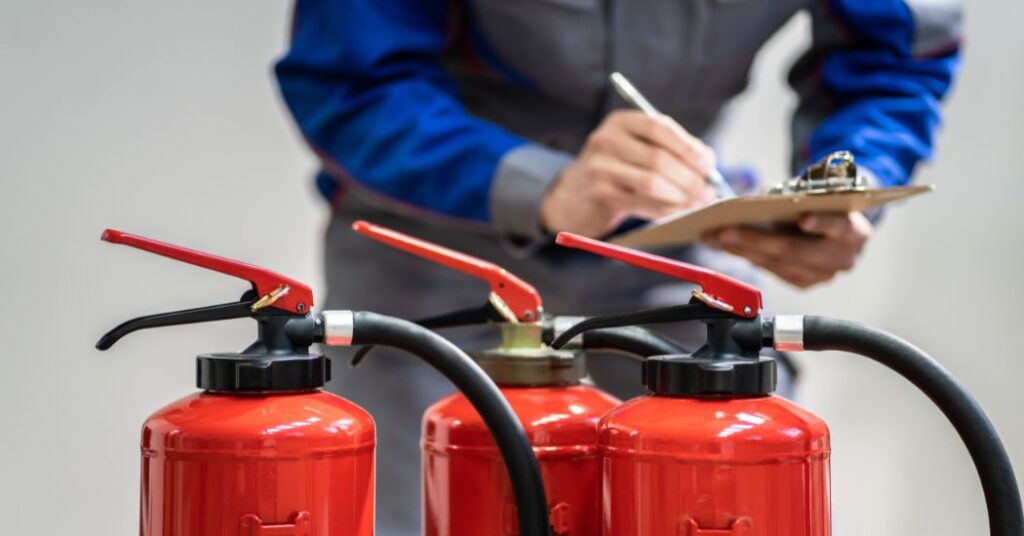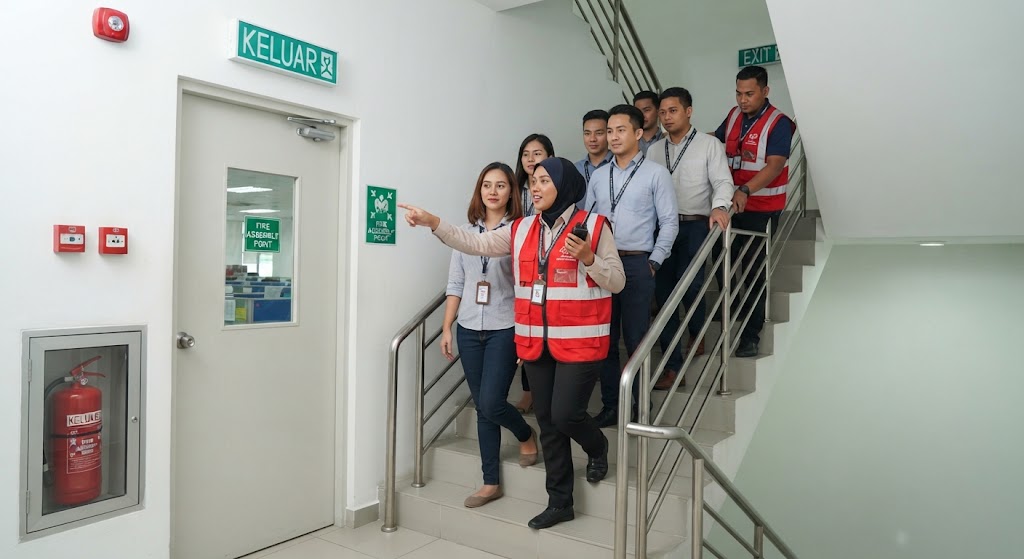
A fire warden training course Malaysia programme prepares selected employees to support workplace evacuation, guide occupants and communicate important information during a fire emergency.
A fire alarm can create confusion within seconds. Employees may use the wrong exit, collect personal belongings or wait for instructions. Meanwhile, visitors and contractors may not understand the building layout or assembly-point procedure.
Therefore, organisations need trained fire wardens who can guide people towards safety and support the wider Emergency Response Team.
AFSA Academy provides practical fire safety, emergency response and hazardous-material training for organisations in Malaysia. Its scenario-based programmes help participants understand their responsibilities and practise emergency procedures in controlled environments.
What Is a Fire Warden?
A fire warden is an employee whom an organisation appoints to support evacuation within a specific floor, department, building zone or work area.
Some organisations use the term fire marshal instead. Although the job title may differ, both roles usually support evacuation, emergency communication and occupant accountability.
A fire warden does not replace professional firefighters or specialised emergency responders. Instead, the person helps manage the organisation’s initial evacuation before external emergency services arrive.
A fire warden may need to:
- Respond immediately when the alarm activates.
- Direct employees towards a safe exit.
- Prevent occupants from using lifts.
- Assist visitors and contractors.
- Check assigned areas when conditions remain safe.
- Report hazards to the emergency coordinator.
- Support headcounts at the assembly point.
- Report missing occupants.
- Prevent unauthorised re-entry.
- Follow instructions from the incident coordinator.
The organisation must define these responsibilities clearly in its Emergency Response Plan.
Why Organisations Need Fire Warden Training
Appointing employees as fire wardens does not automatically prepare them for emergencies.
They need training, practical exercises and clear instructions.
Without suitable preparation, a fire warden may give incorrect directions, delay evacuation or place themselves at unnecessary risk.
A structured fire warden training course can help organisations:
- Clarify evacuation responsibilities.
- Improve employee response to alarms.
- Strengthen communication between departments.
- Prepare wardens to assist visitors.
- Improve assembly-point management.
- Support employee headcounts.
- Identify problems within evacuation routes.
- Strengthen coordination with the Emergency Response Team.
- Reduce confusion during an incident.
- Improve overall workplace preparedness.
Moreover, practical training gives employees an opportunity to apply their responsibilities before an actual emergency occurs.
Reading an emergency procedure alone does not develop practical confidence. Therefore, organisations should combine theoretical learning with drills and realistic workplace scenarios.
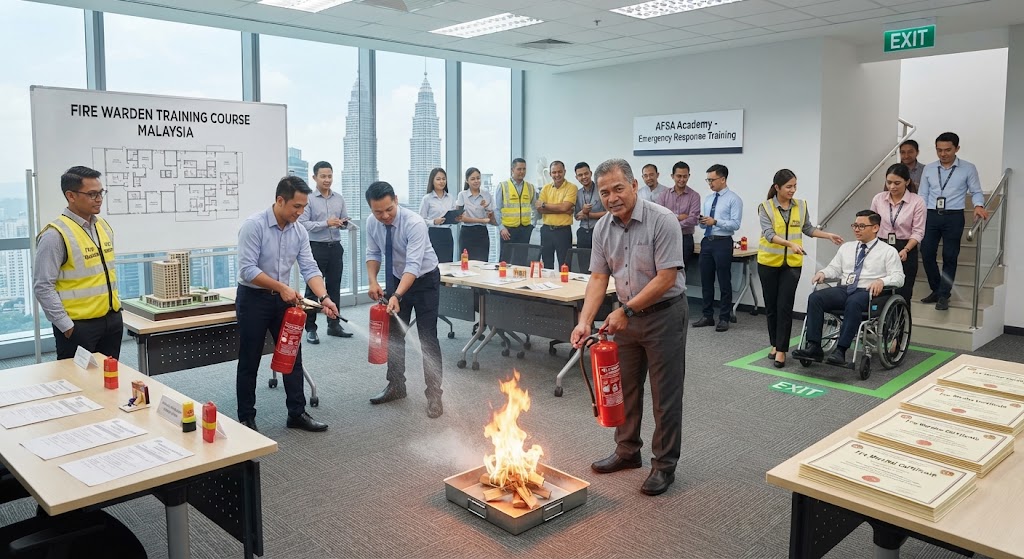
What Does a Fire Warden Training Course Malaysia Cover?
A suitable fire warden training course Malaysia programme should reflect the organisation’s building layout, workforce and emergency risks.
The course may cover several important areas.
Understanding Workplace Fire Hazards
First, participants learn how fires may start and spread within a workplace.
Common hazards may include:
- Overloaded electrical sockets.
- Damaged electrical equipment.
- Poor housekeeping.
- Blocked emergency exits.
- Improper chemical storage.
- Combustible materials near heat sources.
- Hot work activities.
- Unsafe smoking areas.
- Uncontrolled ignition sources.
- Obstructed access to fire equipment.
Fire wardens do not normally conduct specialist fire risk assessments. However, they should recognise obvious hazards and report them to the appropriate person.
Early reporting allows the organisation to correct unsafe conditions before they contribute to an emergency.
Recognising Fire Alarms and Emergency Notifications
Next, participants learn how the organisation communicates an emergency.
The course may explain:
- Different alarm signals.
- Public announcement procedures.
- Manual alarm activation points.
- Internal emergency numbers.
- Communication equipment.
- Emergency contact lists.
- Instructions from the incident coordinator.
Fire wardens should treat every alarm seriously.
They should not assume that an alarm is false or wait for other employees to react first. Instead, they should follow the organisation’s approved procedure.
The alarm must also remain audible throughout the workplace. Organisations should review any area where machinery, walls or protective equipment may prevent employees from hearing it.
Managing Workplace Evacuation
Evacuation forms a major part of fire warden training.
Participants learn how to guide occupants towards safe exits without creating panic or unnecessary delays.
A fire warden may need to:
- Encourage employees to stop work.
- Direct occupants towards the nearest safe exit.
- Use an alternative route when necessary.
- Prevent employees from collecting belongings.
- Keep people moving through corridors.
- Control movement near staircases.
- Prevent the use of lifts.
- Assist visitors and contractors.
- Report blocked or unsafe routes.
- Proceed towards the assembly point.
Fire wardens should use calm, clear and direct instructions.
For example, they may tell employees which exit to use and where to gather. They should avoid shouting unclear messages that could increase confusion.
Checking Assigned Areas Safely
Some organisations ask fire wardens to check assigned rooms, toilets, meeting areas or work zones during evacuation.
However, the fire warden must only perform this task when conditions remain safe.
The person should not:
- Enter a smoke-filled area.
- Open a door that feels unusually hot.
- Delay their own evacuation.
- Search hazardous areas without suitable equipment.
- Re-enter the building after leaving.
- Attempt a rescue beyond their training.
- Continue checking when the escape route becomes unsafe.
Personal safety must remain the priority.
A fire warden should report missing persons to the emergency coordinator or professional responders instead of entering a dangerous area.
Assisting Visitors and Contractors
Visitors, contractors and temporary workers may not understand the workplace evacuation procedure.
Therefore, fire wardens should know how to support them.
The organisation may need to:
- Provide emergency information during registration.
- Display clear evacuation signage.
- assign employees to assist visitors.
- Maintain updated visitor records.
- Include contractors in fire drills.
- Explain the assembly-point procedure.
- Record individuals who leave the premises.
During an evacuation, the fire warden should direct visitors towards a safe exit and assembly point.
Accurate visitor records also help the emergency team determine whether everyone has left the building.
Supporting People Who Need Assistance
Some occupants may need additional support during an evacuation.
They may include:
- People with limited mobility.
- Employees with visual or hearing difficulties.
- Pregnant employees.
- Individuals recovering from injuries.
- Elderly visitors.
- People unfamiliar with the premises.
The organisation should plan suitable assistance before an emergency occurs.
It should identify who provides support, which routes remain accessible and what equipment the team may need.
Fire wardens should understand these arrangements. However, they should not improvise unsafe lifting or rescue methods without training.
Managing the Assembly Point
The evacuation process does not end when employees leave the building.
The emergency team must also manage the assembly area effectively.
At the assembly point, fire wardens may:
- Direct employees towards assigned areas.
- Organise occupants by department.
- Support employee headcounts.
- Review visitor information.
- Report missing persons.
- Keep emergency access routes clear.
- Stop employees from leaving without permission.
- Prevent unauthorised re-entry.
- Provide updates to the emergency coordinator.
- Wait for the official all-clear instruction.
Employees should not gather near entrances, roads or emergency vehicle routes.
A clear assembly-point system helps the organisation account for occupants quickly and communicate accurate information to responders.
Fire Warden and Fire Marshal: Is There a Difference?
Organisations often use the terms fire warden and fire marshal interchangeably.
In some workplaces, both titles refer to the same evacuation role.
However, another organisation may assign different levels of responsibility.
For example, a fire marshal may coordinate several fire wardens. Meanwhile, each warden manages a particular floor or department.
A workplace structure may include:
- Chief fire marshal.
- Floor fire wardens.
- Department wardens.
- Assembly-point coordinators.
- Deputy wardens.
- Communication personnel.
The title matters less than the responsibility.
Therefore, management should define every role clearly within the Emergency Response Plan and communicate the structure to employees.
Fire Warden and Emergency Response Team Responsibilities
A fire warden may form part of the organisation’s wider Emergency Response Team.
The ERT may include:
- An incident commander.
- Emergency coordinators.
- Fire wardens.
- Firefighting team members.
- First aiders.
- Security personnel.
- Communication teams.
- Assembly-point coordinators.
- HAZMAT response personnel.
- Rescue team members.
Fire wardens mainly support evacuation and occupant control.
Meanwhile, other ERT members may manage first aid, communication, initial firefighting or hazardous-material isolation.
Structured emergency response training helps different team members understand how their roles connect during an incident.
Clear coordination prevents team members from repeating tasks or giving conflicting instructions.
How Fire Drill Training Supports Fire Wardens
Fire wardens need regular opportunities to practise their responsibilities.
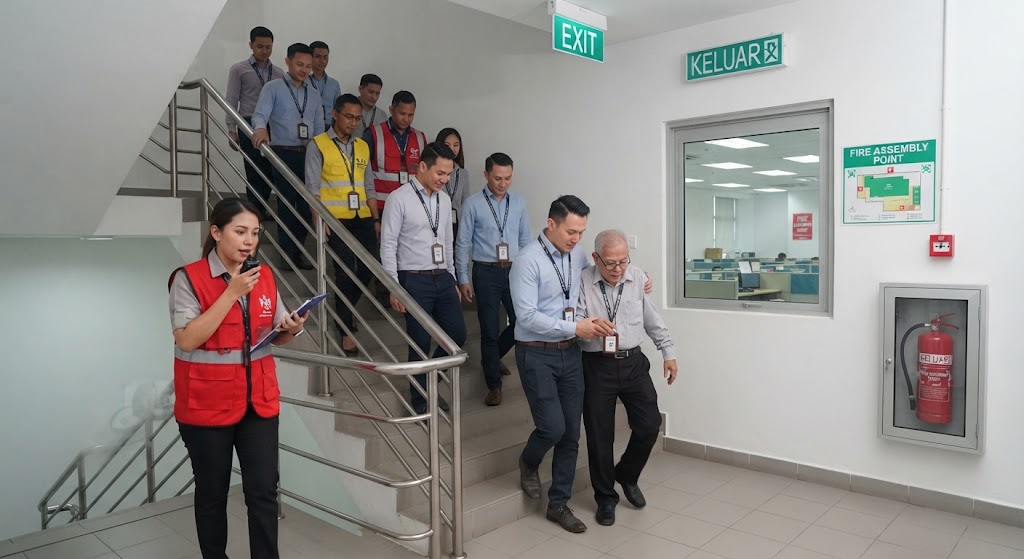
Therefore, organisations should include them in structured fire drills.
During a drill, fire wardens may practise:
- Responding to the alarm.
- Directing employees towards exits.
- Managing alternative evacuation routes.
- Assisting visitors.
- Checking assigned areas safely.
- Communicating with the incident coordinator.
- Supporting assembly-point headcounts.
- Reporting missing occupants.
- Preventing unauthorised re-entry.
Observers should evaluate each fire warden’s performance.
They may review:
- Response time.
- Communication clarity.
- Knowledge of evacuation routes.
- Understanding of assigned responsibilities.
- Ability to control occupant movement.
- Assembly-point coordination.
- Reporting accuracy.
- Compliance with safety limitations.
Afterward, the organisation should conduct a debriefing.
The team can identify weaknesses, assign corrective actions and update the emergency procedure.
The official DOSH Emergency Response Plan checklist highlights areas such as training schedules, alarm testing, procedure updates and evaluation reports.
Regular reviews help organisations keep emergency arrangements active and relevant.
Common Mistakes During Workplace Evacuations
Fire drills often reveal weaknesses that employees overlook during normal operations.
Common mistakes include:
- Employees ignoring the alarm.
- Staff delaying evacuation.
- Employees collecting bags or phones.
- Occupants using the wrong exit.
- People attempting to use lifts.
- Fire wardens giving unclear instructions.
- Wardens waiting too long before evacuating.
- Visitors receiving no assistance.
- Emergency exits remaining blocked.
- Employees gathering at the wrong location.
- Inaccurate attendance records.
- People leaving the assembly area.
- Employees re-entering too early.
- Conflicting information between departments.
The organisation should record every issue.
Next, management should assign a responsible person and completion date for each corrective action.
For example, management may need to improve signage, update employee lists or retrain selected wardens.
Without follow-up, the same weakness may appear during the next exercise or an actual incident.
Does Fire Warden Training Include Basic Firefighting?
Fire warden and firefighting responsibilities are not always the same.
A fire warden mainly supports evacuation. Meanwhile, selected ERT members may receive practical firefighting training.
However, some organisations combine both areas within one programme.
A basic fire fighting training Malaysia session may cover:
- Fire behaviour.
- Fire classifications.
- Common ignition sources.
- Types of portable fire extinguishers.
- Safe extinguisher selection.
- Alarm activation.
- Safe approach distances.
- Escape route awareness.
- Limitations of initial firefighting.
- Safe withdrawal.
Employees should only attempt an initial response when they have suitable training and a safe escape route.
They must evacuate when:
- Smoke reduces visibility.
- Heat becomes intense.
- The fire spreads rapidly.
- Hazardous materials become involved.
- They do not have suitable equipment.
- The escape route becomes unsafe.
- They feel uncertain about the incident.
Training should help employees recognise their limitations. It should never encourage them to take unnecessary risks.
Fire Warden Certificate and Fire Marshal Certificate
Participants may receive a fire warden certificate or fire marshal certificate after completing a training programme.
The certificate may record:
- Participant name.
- Course title.
- Training date.
- Training provider.
- Programme duration.
- Learning areas.
- Assessment result, where applicable.
However, a certificate alone does not guarantee long-term competency.
Employees may forget procedures, change departments or move to a different building zone. The organisation may also modify evacuation routes or introduce new workplace hazards.
Therefore, management should provide refresher training and practical drills.
Before registering, organisations should confirm:
- The programme’s learning outcomes.
- Trainer experience.
- Practical activities.
- Assessment methods.
- Certificate type.
- Refresher requirements.
- Corporate customisation options.
- Current HRD Corp eligibility.
Eligible employers can review the official HRD Corp Claimable Courses information before registering participants.
They should verify the selected course and provider before submitting a claim.
Who Should Attend Fire Warden Training Malaysia?
Organisations should select reliable employees who can remain calm, follow instructions and communicate clearly.
Suitable participants may include:
- Department supervisors.
- Floor representatives.
- Security personnel.
- Facility management employees.
- Maintenance teams.
- Safety committee members.
- Human resource representatives.
- Building management personnel.
- Emergency Response Team members.
- Shift supervisors.
- Warehouse coordinators.
- Administrative employees.
The organisation should appoint enough wardens to cover:
- Different floors.
- Separate departments.
- Multiple work shifts.
- Leave and absence.
- High-risk work areas.
- Isolated locations.
- Large assembly areas.
It should also appoint deputy wardens.
A deputy can perform the role when the primary warden remains absent, attends a meeting or works away from the assigned area.
Fire Warden Training for Different Workplaces
Every workplace has different evacuation risks.
Therefore, the training provider should customise the programme to match the premises.
Offices and High-Rise Buildings
Office training may focus on:
- Staircase movement.
- Floor warden coordination.
- Lift restrictions.
- Visitor management.
- Meeting rooms.
- Assembly-point control.
- Multi-tenant communication.
- Employees with mobility limitations.
High-rise evacuations may require stronger coordination because occupants must travel through shared staircases.
Factories and Manufacturing Plants
Manufacturing facilities may need to address:
- Safe machinery shutdown.
- Production-area evacuation.
- Shift-worker accountability.
- Contractor management.
- Noise that affects alarm audibility.
- Hazardous process areas.
- Emergency vehicle access.
- Alternative exits.
Wardens should understand which employees can stop equipment safely and which tasks should not delay evacuation.
Warehouses and Logistics Centres
Warehouse training may focus on:
- Storage aisles.
- Loading bays.
- Vehicle movement.
- Temporary workers.
- Delivery drivers.
- Combustible goods.
- Blocked route risks.
- Large evacuation distances.
The organisation should also keep escape routes clear despite changing stock arrangements.
Hotels, Hospitals and Educational Facilities
These facilities may need to manage:
- Guests, patients or students.
- Large numbers of occupants.
- People unfamiliar with the building.
- Night-time operations.
- Individuals who need assistance.
- Multiple assembly areas.
- Communication across different zones.
Fire wardens must understand the workplace’s specific occupant profile.
Chemical and High-Risk Facilities
Chemical facilities may require additional preparation for:
- Hazardous-material incidents.
- Gas or vapour releases.
- Wind direction.
- Exclusion zones.
- Alternative assembly areas.
- Protective equipment.
- Decontamination arrangements.
- Specialist emergency communication.
General fire warden training may not provide enough preparation for these environments.
The organisation may also need firefighting, HAZMAT and specialised ERT training.
The Occupational Safety and Health Act 1994 provides an important framework for protecting the safety, health and welfare of people at work.
Meanwhile, the Fire Services Act 1988 supports Malaysia’s fire safety and emergency-response framework.
Organisations should review the requirements that apply to their premises and activities.
How Often Should Fire Wardens Receive Training?
The suitable schedule depends on workplace risks, staff turnover and operational changes.
Organisations should consider refresher training when:
- New wardens receive appointments.
- Employees change departments.
- The workplace layout changes.
- Evacuation routes change.
- New hazards enter the workplace.
- A fire drill identifies weaknesses.
- An actual emergency occurs.
- Employees show uncertainty.
- Certificates or internal requirements require renewal.
Regular drills allow wardens to maintain practical familiarity.
The organisation should also update contact lists, floor assignments and emergency records whenever team members change.
How to Choose a Fire Warden Training Provider
Choosing a training provider requires more than comparing prices.
Organisations should review:
- Trainer qualifications.
- Emergency-response experience.
- Fire safety knowledge.
- Practical training methods.
- Scenario-based exercises.
- Course learning outcomes.
- Assessment methods.
- Training equipment.
- Certificate details.
- Corporate customisation.
- Participant limits.
- Refresher options.
- Post-training feedback.
- HRD Corp eligibility.
The provider should understand the organisation’s building layout, industry and emergency risks.
A generic presentation may not prepare employees for the actual challenges found in a factory, warehouse, high-rise office or chemical facility.
Therefore, organisations should discuss their objectives before confirming a programme.
Why Choose AFSA Academy?
AFSA Academy focuses on fire safety, emergency response, firefighting, rescue and hazardous-material training.
Its programmes combine theoretical knowledge with practical and scenario-based activities.
Depending on workplace requirements, an organisation may combine:
- Fire warden training.
- Fire marshal training.
- Emergency Response Team development.
- Fire drill exercises.
- Fire Safety Manager training.
- Fire Safety Officer training.
- Basic firefighting.
- HAZMAT awareness.
- Rescue and first aid training.
This combined approach helps employees understand how each emergency role connects to the wider response structure.
Organisations can learn more about AFSA Academy and its approach to practical workplace safety training.
AFSA can also review an organisation’s training objectives, number of participants and operational risks before recommending a suitable programme.
Conclusion
Fire wardens play an important role in workplace emergency preparedness.
They guide occupants towards safe exits, support visitors, communicate evacuation problems and assist with employee accountability at the assembly point.
However, appointing employees without training does not create an effective evacuation team.
Organisations must provide clear responsibilities, practical exercises and regular refresher sessions.
A fire warden training course Malaysia programme helps employees understand alarm procedures, evacuation routes, assembly-point management and safe operating limits.
Companies should also combine fire warden training with fire drills, ERT development, basic firefighting and HAZMAT training where relevant.
Businesses can contact AFSA Academy to discuss their workplace layout, training objectives, number of participants and preferred programme format.
Frequently Asked Questions
What is a fire warden training course Malaysia?
A fire warden training course Malaysia prepares selected employees to guide workplace evacuation, assist occupants, support headcounts and communicate with the emergency team.
What does a fire warden do?
A fire warden directs employees towards safe exits, assists visitors, reports hazards and supports assembly-point management.
Is a fire warden the same as a fire marshal?
Many organisations use both terms for similar responsibilities. However, some workplaces appoint a fire marshal to coordinate several wardens.
Can a fire warden fight a fire?
A fire warden should only perform firefighting activities when the person has received suitable training and conditions remain safe. Evacuation remains the main priority.
Does fire warden training include fire drills?
Many programmes include practical evacuation exercises or fire drill participation. Organisations should confirm the course content with the provider.
Who should attend fire warden training?
Department representatives, supervisors, security personnel, facility teams, safety committee members and selected ERT members may attend.
How many fire wardens does a workplace need?
The suitable number depends on building size, floor layout, number of employees, shifts, risks and employee absence. Organisations should provide enough coverage for every occupied area.
What is a fire warden certificate?
A fire warden certificate records that a participant completed a specific training programme. Organisations should still provide refresher training and regular drills.
How often should fire wardens receive refresher training?
The schedule should reflect workplace risks, operational changes, staff turnover, drill results and internal requirements.
Can fire warden training be customised?
Yes. A provider can customise the programme according to the workplace layout, industry, evacuation routes, emergency structure and training objectives.
Is fire warden training claimable through HRD Corp?
Eligible programmes may qualify. Employers should verify the selected provider, programme registration and current claim conditions before registration.
How can an organisation arrange fire warden training?
The organisation can contact AFSA Academy and provide details about its premises, workforce, emergency roles and preferred training outcomes.