If your premises holds a Fire Certificate in Malaysia, there is one requirement that BOMBA now enforces without exception: you must have a certified Fire Safety Manager (FSM) in place. Since the Fire Services (Fire Certificate) Amendment Regulations 2020, every designated premises in Malaysia is legally required to establish a Fire Safety Organisation (OKK) — and the FSM sits at the top of that structure.
Whether you are a building owner, facility manager, HSE officer, or someone looking to pursue FSM certification, this guide explains everything you need to know — from who needs an FSM to what the BOMBA-recognised FSM course covers and how to get certified in Malaysia.
What is a Fire Safety Manager (FSM) under Malaysian law?
A Fire Safety Manager is a certified individual appointed by the owner or person in full management control of a designated premises to oversee all fire safety matters. The FSM is not just a title — it is a legal appointment that BOMBA can verify during Fire Certificate audits and inspections.
The FSM’s appointment must be recognised by the Director General of Jabatan Bomba dan Penyelamat Malaysia (JBPM). This recognition is only granted to individuals who have completed an FSM course through a JBPM-approved training provider and hold a valid certification.
Without a certified FSM on record, your premises cannot fulfil the requirements for Fire Certificate issuance or renewal under Sub-Regulation 2(1)(a) of the Fire Services (Fire Certificate) Regulations 2001 [P.U.(A) 241/2001]. For the latest JBPM directives and enforcement updates, refer to the official Jabatan Bomba dan Penyelamat Malaysia website.
Which premises must appoint a Fire Safety Manager?
Not all buildings in Malaysia require an FSM — but if your premises falls under the designated premises classification under the Fire Services (Designated Premises) Order 1998 [P.U.(A) 276/1998], the appointment is mandatory.
Designated premises categories include:
| Premises Category | Examples |
| Buildings exceeding 18.3 metres in height | Office towers, high-rise residential, hotels |
| Public assembly buildings | Convention centres, theatres, places of worship |
| Factories and manufacturing plants | Processing facilities, workshops, assembly lines |
| Warehouses and storage facilities | Logistics centres, cold storage, bonded warehouses |
| Hotels and hostels | Any premises providing paid accommodation |
| Hospitals and healthcare facilities | Private hospitals, clinics with inpatient facilities |
| Educational institutions | Schools, universities, training centres |
| Shopping complexes | Malls, hypermarkets, retail complexes |
| Premises storing dangerous goods | Chemical storage, LPG depots, petroleum facilities |
If you hold or are applying for a Fire Certificate, the presence of a certified FSM is a condition of that certificate. There is no workaround.
What is the OKK and how does it relate to the FSM?
The Organisasi Keselamatan Kebakaran (OKK) — or Fire Safety Organisation — is the formal internal committee that every designated premises must establish under the 2020 amendment regulations. Think of it as your company’s dedicated fire safety team, structured and documented for BOMBA compliance.
The OKK is not just a piece of paper. It is a functioning committee with defined roles, responsibilities, and reporting lines. When BOMBA conducts an audit, they will want to see evidence that your OKK is active not just appointed on paper.
Minimum OKK structure required by BOMBA
| Role | Minimum Number | Key Responsibility |
| Fire Safety Manager (FSM) | 1 | Overall fire safety coordination; primary BOMBA contact |
| Fire Safety Officer (FSO) | 3 | Support FSM; conduct inspections; lead zone evacuations |
| Emergency Response Team (ERT) | As required | Execute fire response, first aid, and evacuation |
| Fire Wardens | Per floor or zone | Floor-level evacuation guidance and headcount |
The FSM sits at the top of this structure and is accountable for the performance of every other role within the OKK. This is why FSM training covers not just fire science, but leadership, documentation, and regulatory compliance — skills that FSO training does not go into at the same depth.
For a detailed breakdown of the difference between FSM and FSO roles, read our guide on FSM vs FSO — what is the difference and which certification do you need.
FSM course requirements in Malaysia: qualifications and eligibility
To become a certified Fire Safety Manager in Malaysia, candidates must meet specific qualification requirements set by JBPM and complete their training through a JBPM-approved provider.
Education and experience requirements
| Requirement | Details |
| Education | Bachelor’s degree in fire safety, fire engineering, or a relevant discipline — OR relevant professional experience in fire safety management |
| Certification | Must complete FSM course through a JBPM-appointed training provider |
| Certification validity | 3 years from date of issuance |
| Renewal | Must be renewed before expiry through refresher course or re-examination |
| Certifying authority | Director General of JBPM |
It is important to note that completing an FSM course alone does not automatically make someone an FSM. The certification must be issued by the Director General of JBPM, which happens through the approved course completion process at a recognised training provider.
FSO requirements for comparison
Fire Safety Officers have a lower qualification threshold. The minimum education requirement is Sijil Pelajaran Malaysia (SPM), and FSO candidates must complete an approved FSO training course through a JBPM-appointed provider. This makes FSO training the more accessible entry point into fire safety certification, while FSM is positioned for senior personnel with relevant experience or qualifications.
What does a BOMBA-recognised FSM course cover?
A proper FSM course is not a half-day awareness talk. It is a structured, multi-day programme that builds both theoretical knowledge and practical competency. At AFSA Academy, our JBPM-aligned FSM programme covers:
Malaysian fire safety legislation and JBPM regulations
Participants gain a thorough understanding of the Fire Services Act 1988 (Act 341), the Fire Services (Fire Certificate) Regulations 2001, the Uniform Building By-Laws (UBBL), and related amendments. This includes how to read JBPM requirements and apply them to specific premises types.
Establishing and managing an OKK
FSM candidates learn how to set up a compliant OKK structure, define roles and reporting lines, maintain OKK records, and prepare for BOMBA audits. This is one of the most practically relevant modules for anyone taking on the FSM role for the first time.
Fire risk assessment methodology
Step-by-step guidance on identifying fire hazards, evaluating risk levels, and implementing appropriate control measures. Includes practical exercises using real building layouts and industrial site scenarios.
Fire Safety Management Plan (FSMP) preparation
The FSMP is the central document that BOMBA will review during inspections. Participants learn how to write, implement, and review a complete FSMP that meets JBPM requirements including emergency response procedures, equipment maintenance schedules, and evacuation planning.
Fire safety systems and equipment
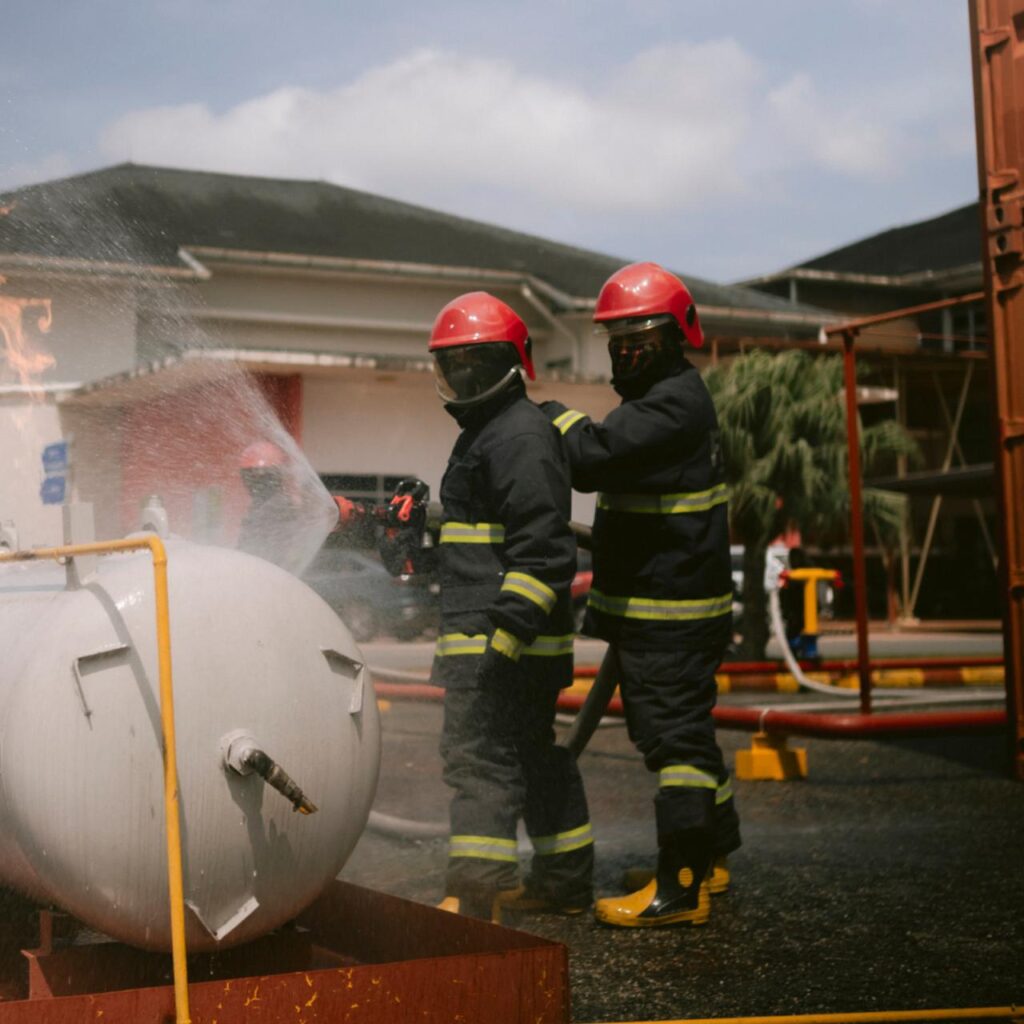
Hands-on training on fire suppression systems, smoke detection panels, sprinkler systems, fire extinguishers, emergency lighting, and alarm systems. Participants learn how to inspect, test, and maintain each system and document the results properly.
Emergency response and evacuation planning
How to develop and test an Emergency Response Plan (ERP), conduct tabletop exercises, and lead live evacuation drills that meet BOMBA’s minimum annual drill requirements.
Practical assessment and certification
All participants complete a written examination and a practical competency assessment. Those who pass receive their FSM certification, issued in accordance with JBPM requirements and valid for three years.
What are the FSM’s ongoing responsibilities after certification?
Becoming a certified FSM is the beginning, not the end. Once appointed, the FSM carries ongoing operational duties that BOMBA can audit at any time:
- Prepare and maintain the Fire and Emergency Action Plan — reviewed annually or after any premises modification
- Conduct fire drills — minimum once per year, fully documented with timing and observations
- Inspect and maintain fire safety equipment — scheduled inspections, service records, and defect reporting
- Supervise FSOs and fire wardens — ensure all OKK members are trained, active, and fulfilling their roles
- Liaise with BOMBA — primary point of contact during Fire Certificate applications, renewals, and inspections
- Investigate fire incidents — document findings and implement corrective actions within required timelines
- Renew FSM certification before expiry — every 3 years, through an approved refresher or re-examination
Important: BOMBA auditors do not just check whether an FSM has been appointed. They check whether the FSM’s duties are actually being carried out. Audit evidence includes drill records, equipment inspection logs, FSMP documents, and OKK meeting minutes. An FSM who holds a certificate but has no records to show is still a compliance risk.
What happens if your premises does not have a certified FSM?
The consequences of non-compliance are significant and have become more consistently enforced since the 2020 amendment regulations came into effect.
Premises without a certified FSM face:
- Rejection of Fire Certificate application or renewal — you cannot legally operate as a designated premises without a valid Fire Certificate
- Stop-work notices issued by JBPM — shutting down operations until compliance is achieved
- Loss of Certificate of Fitness for Occupation (CFO) — affecting your legal right to occupy the building
- Fines and legal prosecution — under the Fire Services Act 1988
- Insurance implications — fire insurance claims can be disputed or rejected if the premises was found non-compliant at the time of an incident
In short, not having a certified FSM is not just a paperwork gap — it is a serious legal and financial exposure for the premises owner and management.
Is FSM training HRD Corp claimable?
Yes. AFSA Academy is a registered HRD Corp training provider, which means Malaysian employers can submit an SBL-Khas claim to have the FSM course fees covered fully or partially through their HRD Corp levy fund.
This significantly reduces the financial barrier to getting your team certified. The process involves submitting a training application through the HRD Corp portal before the course begins. Our team at AFSA Academy can guide you through the claim process if needed.
For companies that have been contributing to HRD Corp but rarely claiming, FSM and FSO training is one of the most practical and legally beneficial ways to utilise those funds.
Choosing the right FSM training provider in Malaysia
Not all fire safety training providers in Malaysia are equal. To ensure your FSM certification is recognised by BOMBA, your training provider must be approved by JBPM. Here is what to check before enrolling:
- JBPM-approved status — the provider must be on the list of appointed FSM training providers recognised by the Director General of JBPM
- HRD Corp registration — enables your company to claim training fees through the levy fund
- Practical training components — BOMBA requires competency-based assessment, not just classroom attendance
- Updated curriculum — must reflect current regulations including the 2020 amendment
- Experienced instructors — ideally practitioners with real-world fire safety and emergency response backgrounds
AFSA Academy meets all of the above criteria. Our FSM programme is conducted at our facility in Pasir Gudang, Johor, and we also provide in-house training for companies across Malaysia. You may also compare programmes at other registered providers such as FERA Training Centre before making your decision.
For full details on what our FSM and FSO courses include, visit our FSM and FSO training page.
Frequently Asked Questions
Can my company appoint an external person as FSM?
Yes. The FSM does not need to be a full-time employee of your organisation. However, whoever is appointed must hold valid FSM certification from a JBPM-approved provider and must be able to fulfil the ongoing responsibilities of the role including attending audits and maintaining FSMP records.
How often does an FSM need to renew their certification?
FSM certification is valid for three years. Renewal must be completed before the certification expires through an approved refresher course or re-examination. Lapsed certification means your FSM appointment is no longer valid in the eyes of BOMBA.
Do I need both an FSM and FSOs, or is one enough?
Both are required. The OKK structure mandates a minimum of one FSM and three FSOs for designated premises. The FSM and FSO roles serve different functions and cannot be substituted for each other. Read more in our guide on the difference between FSM and FSO in Malaysia.
What is the difference between an FSM and a Safety and Health Officer (SHO)?
An SHO is appointed under the Occupational Safety and Health Act 1994 (OSHA) and covers broad workplace safety responsibilities. An FSM is specifically appointed under the Fire Services Act 1988 to manage fire safety compliance. A person can hold both roles if they are qualified for both, but the certifications are separate and serve different regulatory frameworks.
How long does the FSM course take at AFSA Academy?
Our FSM programme runs over five days, combining classroom instruction with practical hands-on assessment. The FSO programme takes two to three days. Both are available as public intake at our Pasir Gudang facility or as in-house training at your premises.
Get your FSM certified before your next BOMBA audit
The Fire Services (Fire Certificate) Amendment Regulations 2020 made FSM appointment a hard requirement not a best practice. If your premises are classified as designated premises and you do not yet have a certified FSM in place, the time to act is now, not when BOMBA comes knocking.
At AFSA Academy, we have helped companies across Johor and Malaysia get their fire safety teams certified, compliant, and audit-ready. Our FSM and FSO courses are practical, JBPM-aligned, and HRD Corp claimable.
Call or WhatsApp: +6012-612 0893
Email: [email protected]
Location: Politeknik Ibrahim Sultan, Pasir Gudang, Johor
Contact AFSA Academy to register for the next FSM course or enquire about in-house training for your team.