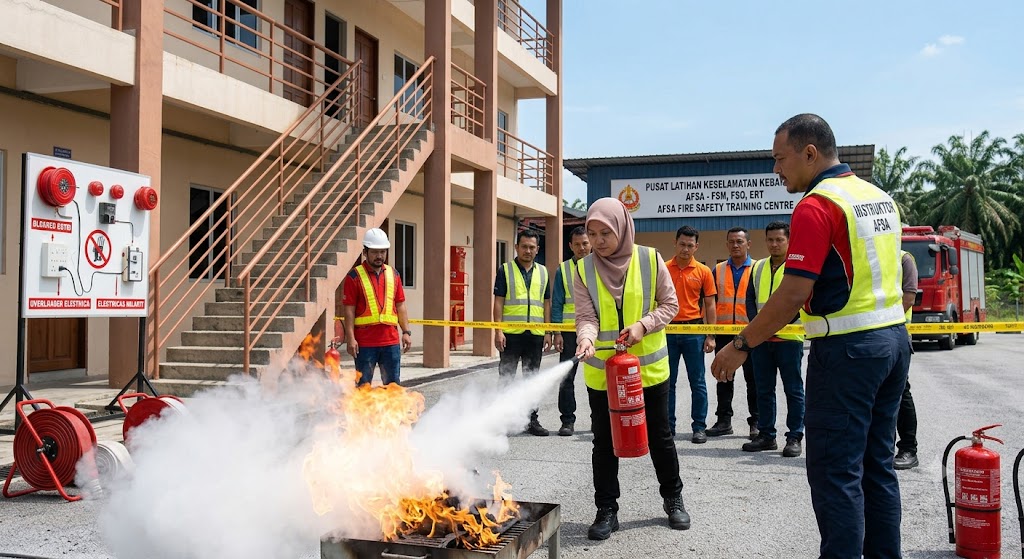
If you work in workplace safety, facilities management, or human resources in Malaysia, you have probably come across the terms FSM and FSO more than once. Both roles are essential to fire safety compliance in Malaysian workplaces — but they are not the same thing.
Many employers and employees make the mistake of treating these two certifications as interchangeable. In reality, they carry different scopes of responsibility, different training durations, and different legal implications for your organisation.
In this article, we break down the key differences between a Fire Safety Manager (FSM) and a Fire Safety Officer (FSO), explain who needs which certification, and help you decide which training path is right for you or your team.
What is a Fire Safety Manager (FSM)?
A Fire Safety Manager is the senior person within an organisation responsible for the entire fire safety management system. This is a strategic, management-level role. The FSM is appointed by the building owner or top management and is directly accountable for the organisation’s overall compliance with fire safety regulations in Malaysia.
The key responsibilities of an FSM include:
- Developing, implementing, and reviewing the Fire Safety Management Plan (FSMP)
- Overseeing all fire safety systems, including suppression systems, alarms, and emergency lighting
- Conducting or commissioning fire risk assessments for the entire premises
- Planning and supervising fire drills and emergency evacuation exercises
- Appointing, guiding, and supervising Fire Safety Officers across zones or departments
- Liaising directly with Jabatan Bomba dan Penyelamat Malaysia (JBPM) during audits and inspections
- Ensuring all fire-related incidents are reported and investigated properly
In short, the FSM holds the highest level of fire safety responsibility within an organisation. If a fire incident occurs and it is found that the FSMP was not properly maintained, the FSM and by extension, the organisation can be held legally liable.

What is a Fire Safety Officer (FSO)?
A Fire Safety Officer is the operational frontliner of workplace fire safety. Where the FSM sets the strategy and framework, the FSO carries out the day-to-day enforcement of fire safety rules on the ground.
The FSO is typically assigned to a specific floor, zone, or department within a building or facility. Their responsibilities include:
- Conducting regular fire safety inspections within their assigned zone
- Maintaining fire safety logs, checklists, and compliance records
- Ensuring fire extinguishers, emergency exits, and escape routes are clear and functional
- Educating colleagues on fire hazard awareness and evacuation procedures
- Assisting in coordinating evacuations during fire drills or actual emergencies
- Reporting fire safety non-compliances to the FSM immediately
- Providing first response during the initial stage of a fire, before the fire brigade arrives
The FSO does not carry the overall strategic responsibility that the FSM holds. However, without effective FSOs on the ground, even the best Fire Safety Management Plan becomes difficult to execute.
FSM vs FSO: side-by-side comparison
To make the difference clearer, here is a direct comparison of both roles across the most important criteria:
| Criteria | Fire Safety Manager (FSM) | Fire Safety Officer (FSO) |
| Level | Strategic / Management | Operational / Ground level |
| Scope of work | Entire building or organisation | Assigned zone or department |
| Main duty | Fire Safety Management Plan (FSMP) | Daily fire safety enforcement |
| Appointed by | Building owner or top management | Fire Safety Manager |
| JBPM interaction | Direct — leads audits and reporting | Indirect — supports FSM |
| Training duration | 5 days | 2–3 days |
| Prerequisites | Safety experience recommended | No prior experience required |
| Legal obligation | Mandatory for high-risk premises | Required for designated zones |
| Who should attend | HSE managers, facility managers, SHOs | Supervisors, wardens, safety committee |

Which certification does Malaysian law require?
Under the Fire Services Act 1988 (Act 341), enforced by Jabatan Bomba dan Penyelamat Malaysia (JBPM), certain categories of premises are legally required to appoint both certified FSMs and FSOs.
Premises that typically require mandatory FSM and FSO appointments include:
- High-rise residential and commercial buildings
- Factories and manufacturing plants
- Hospitals and healthcare facilities
- Shopping malls and retail complexes
- Hotels and hospitality venues
- Educational institutions and universities
- Oil, gas, and petrochemical facilities
- Warehouses and logistics hubs
If your premises fall under any of these categories and you do not have certified FSM and FSO personnel in place, you risk receiving a stop-work notice from JBPM, losing your Certificate of Fitness for Occupation (CFO), or facing fines and legal action.
It is always advisable to verify your specific requirements directly with JBPM or a certified training provider, as requirements may vary by state, building classification, and occupancy type.
Who should get FSM certification?
FSM certification is designed for individuals who carry or will carry senior fire safety responsibility within their organisation. You should pursue FSM training if you are:
- A Safety and Health Officer (SHO) managing fire safety compliance
- A Facility Manager or Building Manager responsible for the entire premises
- An HSE Manager in a manufacturing, oil and gas, or industrial environment
- A Fire Safety Coordinator in a hospital, mall, or hotel
- A company director or senior manager who has been formally appointed as the responsible fire safety person by your organisation
Because the FSM role involves preparing and maintaining a Fire Safety Management Plan, writing reports for JBPM, and supervising all FSOs the training is more intensive and runs over five full days, with both classroom and practical components.
Who should get FSO certification?
FSO certification is suited for employees who will take on direct, on-the-ground fire safety duties within a specific area or department. You should consider FSO training if you are:
- A floor warden or fire warden in an office or commercial building
- A supervisor or team leader in a manufacturing or warehouse setting
- A security officer assigned to fire safety monitoring duties
- A member of your company’s Safety and Health Committee
- Any employee formally assigned as a fire safety responsible person for a zone or area
FSO training does not require prior experience in safety. It is accessible to most working adults and takes between two to three days to complete. This makes it the most common entry point into formal fire safety certification in Malaysia.
Can one person hold both FSM and FSO roles?
In smaller organisations or SMEs, it is not uncommon for one person to be trained in both FSM and FSO competencies. However, in practice particularly in larger premises the FSM and FSO roles are held by different individuals. This is because:
- The FSM focuses on planning and compliance at the strategic level
- The FSO focuses on daily enforcement and operational inspections
- Combining both roles in one person can create gaps in ground-level monitoring
For large facilities such as factories, hospitals, or shopping complexes, JBPM typically expects multiple FSOs to be appointed across different zones, all reporting to the FSM.
How do FSM and FSO work together?
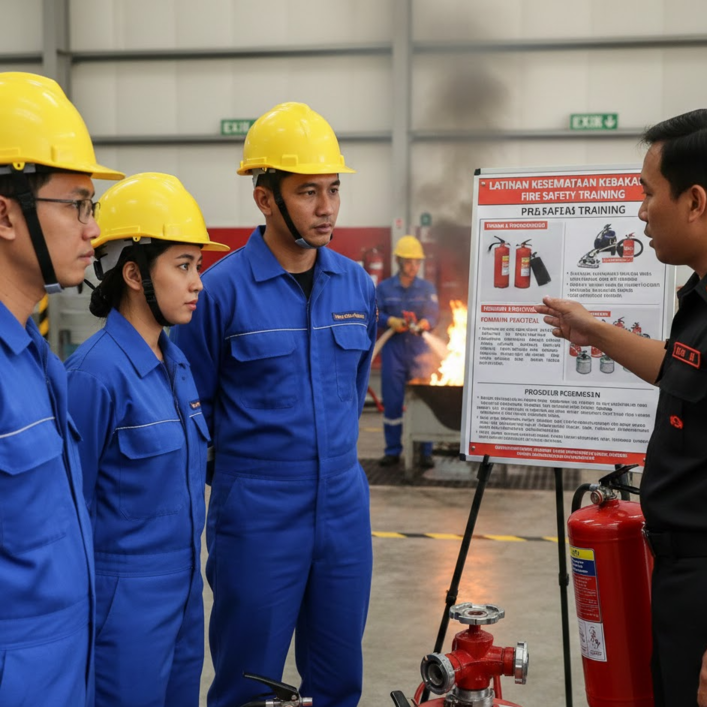
Think of the FSM and FSO relationship as similar to a manager and their team. The FSM sets the strategy, writes the policies, and ensures the organisation is compliant at a systemic level. The FSOs execute those policies on the ground, carry out daily inspections, and act as the first point of contact during an emergency.
When both roles work well together, the result is a fully functional fire safety system one that satisfies JBPM requirements, protects employees, and reduces liability for the organisation.
When either role is missing or poorly trained, the system breaks down. This is why choosing the right training provider matters as much as choosing the right certification.
How long does FSM and FSO certification last?
FSM and FSO certifications are not permanent. Most certifications are valid for a defined period and require renewal to remain current. The general industry practice in Malaysia is to renew fire safety certifications every three years, although this may vary based on JBPM directives and the nature of your premises.
Organisations are advised to track the renewal dates of all their certified FSM and FSO personnel to avoid lapses in compliance — particularly ahead of scheduled JBPM audits or building inspections.
FSM and FSO training at AFSA Academy
At AFSA Academy, we offer certified FSM and FSO training programmes conducted at our facility at Politeknik Ibrahim Sultan, Pasir Gudang, Johor. Our courses are:
- HRD Corp claimable — employers can submit SBL-Khas claims to cover training fees
- Hands-on and practical — we go beyond classroom theory with scenario-based training
- Aligned with JBPM requirements — our curriculum is kept current with the latest regulatory standards
- Delivered by experienced practitioners — our instructors have real-world emergency response backgrounds
Whether you need to certify a single HSE manager as your FSM, or train an entire team of FSOs across multiple departments, we can structure a programme that fits your timeline and budget.
For a full overview of what our FSM and FSO training covers, visit our FSM and FSO training page. To discuss in-house or corporate training options, see our corporate training services.
Frequently Asked Questions
Is FSO training enough to satisfy JBPM requirements?
For most employees assigned as floor wardens or zone safety persons, yes — FSO certification is sufficient. However, your organisation must also appoint at least one certified FSM to oversee the entire fire safety management system. FSO training alone, without an FSM in place, does not fulfil full JBPM compliance requirements.
Can I attend FSM training without first getting FSO certified?
Yes. FSM and FSO are separate programmes. You can enrol in FSM training directly without having first completed FSO training, provided you meet the recommended experience requirements for the FSM programme.
Is there an exam at the end of the training?
Yes. Both FSM and FSO programmes include a written assessment and a practical competency evaluation. Participants who pass both components receive their certification.
Can my company arrange in-house FSO training for a large group?
Yes. AFSA Academy provides corporate and in-house training options for companies that need to certify multiple employees at once. This is often more cost-effective for large teams. Contact us to discuss your requirements.
What happens if my company does not have a certified FSM or FSO?
Non-compliance with JBPM requirements can result in stop-work orders, fines, or loss of your Certificate of Fitness for Occupation (CFO). In the event of a fire-related incident, the absence of certified fire safety personnel can also expose the organisation to criminal liability.
Both FSM and FSO certifications are essential they are not competing roles, but complementary ones. The FSM holds the strategic responsibility for fire safety compliance across the entire organisation. The FSO carries that strategy into daily action on the ground.
If you are a manager, HSE officer, or facility head, FSM training is almost certainly the right path for you. If you are a supervisor, warden, or safety committee member, FSO training gives you the skills and legal standing to carry out your fire safety duties effectively.
Not sure which one applies to your situation? Our team at AFSA Academy is happy to help you assess your needs and recommend the right certification.
Call or WhatsApp: +6012-612 0893
Email: [email protected]
Location: Politeknik Ibrahim Sultan, Pasir Gudang, Johor
Get in touch with AFSA Academy to register or enquire about the next available FSM or FSO training session.