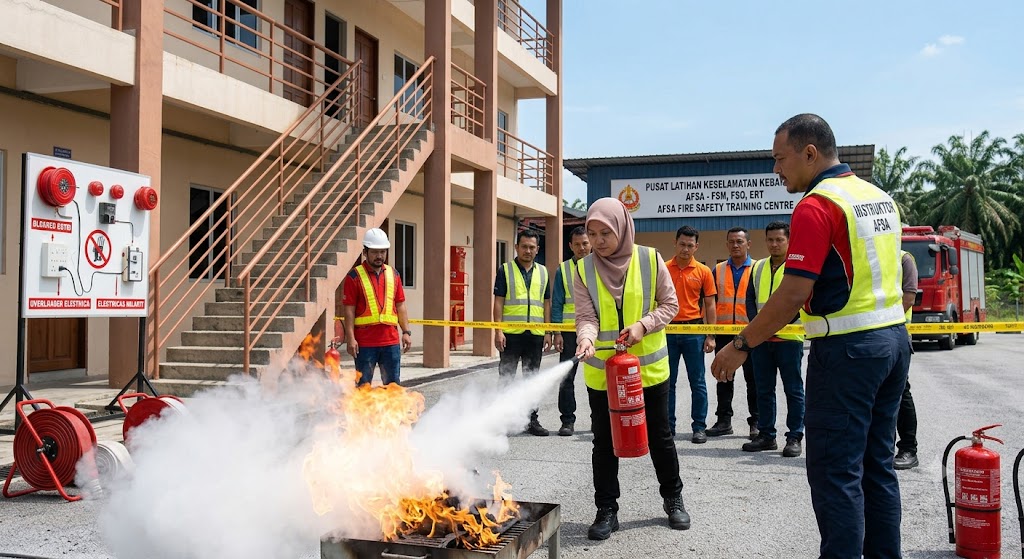
A fire safety manager course Malaysia programme helps organisations develop competent personnel who can manage fire risks, coordinate emergency procedures and strengthen workplace preparedness.
Participants learn how to identify fire hazards, organise evacuation drills, maintain safety records and guide employees during emergencies.
However, effective workplace fire safety requires more than appointing one manager. Organisations also need trained Fire Safety Officers, Emergency Response Team members and fire wardens.
Therefore, companies should combine fire safety management training with practical exercises. A complete programme may cover fire prevention, evacuation, emergency communication, basic firefighting and HAZMAT awareness.
AFSA Academy provides practical fire safety, emergency response and hazardous-material training for organisations across Malaysia. Its scenario-based approach helps participants connect classroom knowledge with actual workplace responsibilities.
Why Fire Safety Training Matters in Malaysia
A workplace fire can develop quickly. Smoke, heat, confusion and poor communication may disrupt an emergency response plan within minutes.
Therefore, employees must understand their responsibilities before an incident occurs. They should know the evacuation route, emergency exit, assembly point, alarm procedure and communication structure.
A structured workplace fire safety programme can help organisations:
-
- Identify common fire hazards.
-
- Improve emergency communication.
-
- Strengthen evacuation procedures.
-
- Clarify employee responsibilities.
-
- Practise safe initial response actions.
-
- Evaluate performance after drills.
-
- Maintain accurate training records.
-
- Reduce confusion during an emergency.
Moreover, trained employees can respond in an organised manner. Instead of acting without direction, they can follow an established Emergency Response Plan.
The Fire Services Act 1988 provides an important fire safety framework in Malaysia.
Meanwhile, the Occupational Safety and Health Act 1994 outlines employers’ general responsibilities for protecting workplace safety and health.
Organisations should assess the requirements that apply to their premises, employees and operational activities.
What Does a Fire Safety Manager Course Cover?
A fire safety manager course develops the knowledge required to coordinate fire prevention and emergency preparedness activities within an organisation.
The programme does not focus only on extinguishing fires. Instead, it covers the management processes that support an effective workplace fire safety system.
Participants may learn how to:
-
- Identify workplace fire hazards.
-
- Support fire risk assessments.
-
- Develop fire prevention measures.
-
- Organise evacuation procedures.
-
- Plan and evaluate fire drills.
-
- Monitor emergency exits.
-
- Support fire equipment inspections.
-
- Maintain fire safety records.
-
- Recommend corrective actions.
A Fire Safety Manager normally performs a strategic role. Therefore, the person must communicate clearly with management, employees, contractors and emergency responders.
Companies searching for a course for fire safety manager should choose a programme that combines theoretical knowledge with practical exercises.
This approach allows participants to understand how emergency procedures work under realistic workplace conditions.
Organisations can review AFSA’s FSM and FSO training programme when planning professional development for workplace fire safety personnel.
Fire Safety Manager and Fire Safety Officer Roles
A Fire Safety Manager and a Fire Safety Officer share the same main objective. Both roles help protect employees, visitors, property and business operations.
However, their daily responsibilities may differ.
The Fire Safety Manager normally coordinates the organisation’s overall fire safety programme. This person may schedule training, review records, monitor corrective actions and report safety performance to management.
Meanwhile, a Fire Safety Officer may conduct routine inspections, identify hazards and ensure that emergency exits remain accessible.
Fire Safety Manager responsibilities may include:
-
- Coordinating the fire safety programme.
-
- Reviewing emergency plans.
-
- Scheduling drills and employee training.
-
- Monitoring inspection findings.
-
- Reporting critical risks.
-
- Maintaining fire safety records.
-
- Coordinating internal emergency teams.
- Reviewing corrective actions.
Fire Safety Officer responsibilities may include:
-
- Inspecting assigned workplace areas.
-
- Identifying and reporting hazards.
-
- Checking emergency exits.
-
- Supporting equipment inspections.
-
- Monitoring housekeeping practices.
-
- Assisting during evacuations.
-
- Recording inspection findings.
-
- Reporting unresolved issues.
A suitable fire and safety officer course can help employees understand these responsibilities and apply them consistently.
Important Topics Covered During an FSM Course
A well-structured FSM course should provide practical knowledge that supports daily fire safety management.
Fire hazard identification
Participants learn how to recognise common hazards such as blocked exits, overloaded electrical sockets, damaged equipment, poor storage and uncontrolled ignition sources. Early identification allows an organization to correct problems before they contribute to an emergency.
Fire prevention planning
Participants learn how inspections, workplace procedures and employee awareness can reduce fire risks. They may also study how good housekeeping, equipment maintenance, safe storage and accessible escape routes support fire prevention.
Emergency Response Plan coordination
A Fire Safety Manager must understand the organisation’s Emergency Response Plan. Therefore, participants learn how to assign responsibilities, organise communication and coordinate evacuation procedures. The DOSH Emergency Response Plan checklist covers areas such as training schedules, emergency equipment, alarm testing, procedure updates and evaluation records. These elements help organizations maintain an active Emergency Response Plan instead of treating it as a document that employees rarely review.
Fire drill management
Participants learn how to plan, conduct and evaluate workplace fire drills. A useful drill should test the complete emergency process. It should not only measure how quickly employees leave the building.
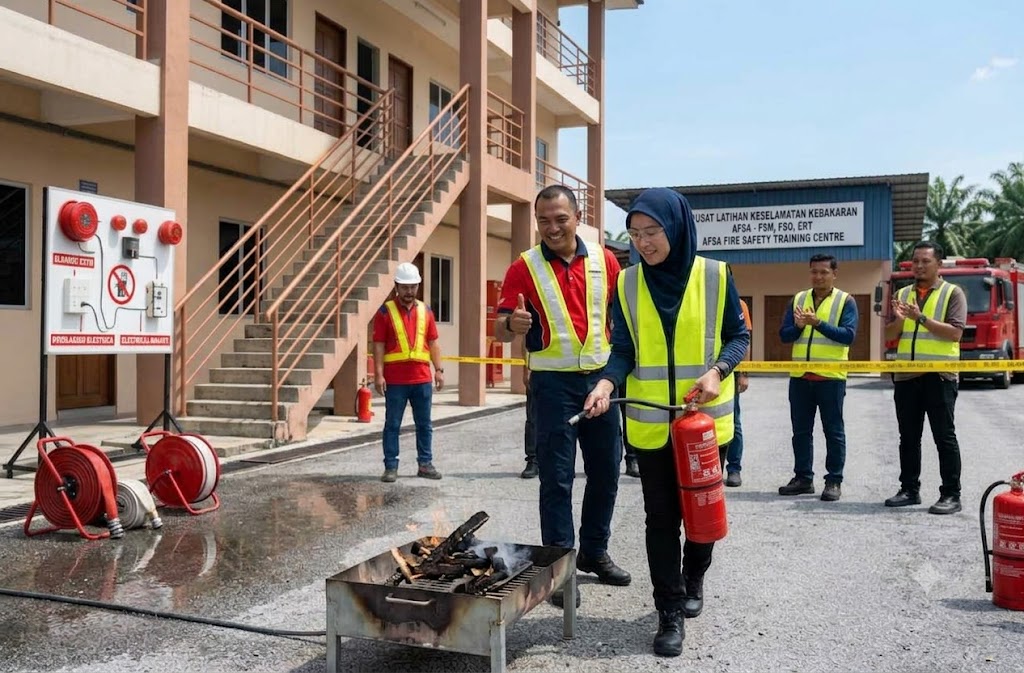
The evaluation should also review:
-
- Alarm effectiveness.
-
- Emergency communication.
-
- Exit accessibility.
-
- Employee movement.
-
- Assembly-point management.
-
- Visitor assistance.
-
- Employee accountability.
- Emergency team coordination.
Documentation and corrective action
Fire safety personnel need accurate records. These records may include inspection reports, training attendance, fire drill observations, equipment inspection records and corrective action reports. Good documentation helps management identify repeated issues and prioritise improvements.
Why Organisations Need ERT Training Malaysia
An Emergency Response Team acts as the organisation’s internal response group during an emergency. Therefore, ERT training Malaysia should prepare members to operate within a clear command, communication and coordination structure.
ERT members may support:
-
- Emergency communication.
-
- Workplace evacuation.
-
- Assembly-point management.
-
- Initial incident assessment.
-
- Basic firefighting within safe limits.
-
- First aid assistance.
-
- Coordination with external responders.
-
- Initial HAZMAT isolation.
-
- Employee accountability.
However, team members must not perform tasks beyond their training, equipment or assigned responsibilities.
Their priorities should include personal safety, early communication and organised incident coordination.
A structured Emergency Response Team training programme can help organisations develop a capable internal response team.
The programme should reflect the organization’s layout, operational activities and emergency risks.
What Is ERT Training Bomba Malaysia?
Many organisations search for ERT training Bomba Malaysia when they need training that reflects local emergency response practices and fire safety expectations.
However, organisations should check the scope, recognition and certification attached to every programme.
They should not assume that every ERT course provides the same learning outcomes.
Before registering, organisations should ask:
-
- Who conducts the programme?
-
- What practical exercises are included?
-
- Does the programme match the workplace risk profile?
-
- What assessment will participants complete?
-
- What certificate will participants receive?
-
- Does the programme require refresher training?
-
- Can employers apply for HRD Corp support?
-
- Does the programme meet the organisation’s objectives?
The training provider should also understand the organization’s building layout, emergency procedures and operational risks.
Fire Drill Training Malaysia
A fire drill allows an organisation to test its emergency procedures in a controlled environment.
Therefore, fire drill training Malaysia should include planning, execution and post-drill evaluation.
Before conducting a drill, the emergency team should confirm:
-
- Alarm and notification procedures.
-
- Emergency contact responsibilities.
-
- Primary and alternative evacuation routes.
-
- Emergency exits.
-
- Assembly areas.
-
- Assistance for visitors.
-
- Support for people who need help.
-
- Employee accountability methods.
During the drill, appointed observers should record delays, communication problems, unsafe behaviour and confusion among employees.
Afterward, the organisation should conduct a review session. The team can then assign corrective actions and update the Emergency Response Plan.
Regular drills help employees remember their responsibilities. They also allow new employees to understand the organization’s evacuation process.
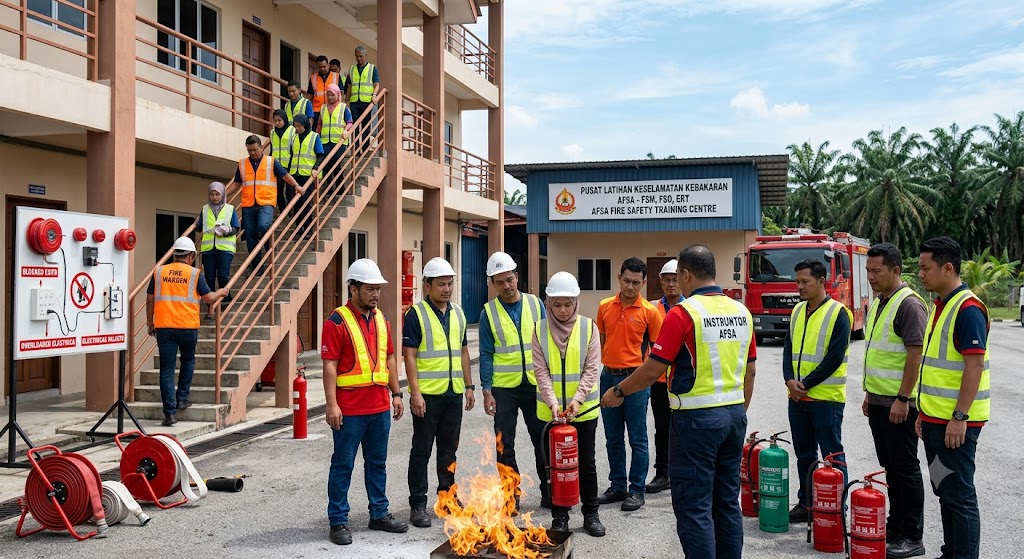
Fire Warden Training Course
A fire warden training course prepares selected employees to support evacuation within an assigned floor, department or workplace zone.
Some organisations use the term fire marshal. Other organisations use fire warden.
Although the title may differ, the role normally focuses on evacuation support, communication and area coordination.
A fire warden may need to:
-
- Direct employees towards the correct exit.
-
- Check designated areas when safe.
-
- Prevent employees from using lifts.
-
- Assist visitors and contractors.
-
- Report conditions to the emergency coordinator.
-
- Support headcounts at the assembly point.
-
- Prevent employees from re-entering.
-
- Report missing-person information.
A fire warden certificate or fire marshal certificate may confirm that a participant completed a specific programme. However, organisations should also conduct refresher training and practical drills. A certificate alone does not guarantee readiness. Employees must continue practicing the correct emergency procedures.
Basic Fire Fighting Training Malaysia
A basic fire fighting training Malaysia programme introduces participants to fire behaviour and initial response principles.
The programme may cover:
-
- Common causes of workplace fires.
-
- Fire classifications.
-
- Types of fire extinguishers.
-
- Safe extinguisher selection.
-
- Alarm activation.
-
- Evacuation procedures.
-
- Limitations of initial firefighting.
-
- Safe withdrawal from an incident.
During practical training, participants may learn how to operate suitable firefighting equipment under controlled supervision. However, personal safety must remain the priority.
Employees should raise the alarm, follow emergency procedures and evacuate when conditions become unsafe.
Training does not turn employees into professional firefighters. Instead, it helps them understand their limitations and make safer decisions during the early stage of an incident.
Fire Safety Officer Course Malaysia
A fire safety officer course Malaysia prepares employees to support daily workplace fire safety activities.
The programme may combine fire safety knowledge with inspections, hazard identification and emergency communication.
Participants may learn how to:
-
- Conduct workplace inspections.
-
- Identify unsafe conditions.
-
- Report hazards to management.
-
- Monitor emergency exits.
-
- Check fire equipment locations.
-
- Support employee awareness.
-
- Assist during fire drills.
-
- Maintain inspection records.
A fire safety officer certification may also support an employee’s professional development.
However, employers should confirm the programme scope, learning outcomes and certificate type before registering participants.
Workplace Fire Safety Training for Different Industries
Every workplace has a different risk profile.
Therefore, organisations should not use the same training plan for every industry.
For example, a corporate office may focus on evacuation, electrical hazards and fire warden responsibilities.
Meanwhile, a warehouse may require additional training on combustible goods, storage arrangements and vehicle movement.
A manufacturing or chemical facility may require stronger ERT, firefighting and HAZMAT capabilities.
Workplace fire safety training may benefit:
-
- Factories and manufacturing plants.
-
- Warehouses and logistics centres.
-
- Commercial buildings.
-
- Shopping centres.
-
- Hotels and hospitality businesses.
-
- Construction sites.
-
- Educational institutions.
-
- Healthcare facilities.
-
- Oil and gas operations.
-
- Chemical facilities.
-
- Property management teams.
Organizations can explore AFSA’s fire safety and emergency response services to identify programmes that match their operational needs.
HAZMAT Training Malaysia
Some emergencies may involve chemicals, gases, fuels or other hazardous materials.
Therefore, organisations that manufacture, store, transport or use chemicals should consider HAZMAT training Malaysia.
HAZMAT awareness training may cover:
-
- Hazardous material classifications.
-
- Chemical labels and warning signs.
-
- Safety Data Sheet interpretation.
-
- Personal protective equipment.
-
- Safe chemical handling.
-
- Spill isolation.
-
- Initial containment.
-
- Emergency notification.
-
- Decontamination awareness.
AFSA’s HAZMAT training programme helps participants understand hazardous material identification, safe handling practices and initial emergency response procedures.
Participants must also understand their operational limits.
Untrained employees should not enter a hazardous area or perform advanced response activities without suitable training, equipment and authorization.
Who Should Attend Fire Safety Management Training?
A fire safety management training programme can support employees who hold operational, safety or building-management responsibilities.
Suitable participants may include:
-
- Facility managers.
-
- Building managers.
-
- Safety and Health Officers.
-
- OSH coordinators.
-
- Security supervisors.
-
- Maintenance personnel.
-
- Fire Safety Officers.
-
- ERT leaders and members.
-
- Fire wardens.
-
- Department heads.
-
- Property management teams.
-
- Warehouse supervisors.
-
- Plant supervisors.
Senior management should also understand the programme.
Management support helps organizations allocate resources, approve corrective actions and close identified safety gaps.
How to Choose the Right Training Programme
Choosing the right programme requires more than comparing course fees.
First, review the trainers’ experience and competency.
Next, check the practical component. Participants need opportunities to apply what they learn.
Then, review the learning outcomes. The course should match the participant’s role and workplace risk exposure.
Organisations should consider:
-
- Trainer experience.
-
- Practical training facilities.
-
- Scenario-based activities.
-
- Learning outcomes.
-
- Assessment methods.
-
- Certificate type.
-
- Programme recognition.
-
- Refresher training options.
-
- Corporate customisation.
-
- HRD Corp eligibility.
Eligible employers can review the official HRD Corp Claimable Courses information before registering employees.
Employers should confirm whether the selected programme and provider meet the latest claim requirements.
Why Choose AFSA Academy?
AFSA Academy focuses on fire safety, emergency response, firefighting, rescue and hazardous-material training.
Its programmes combine theoretical learning with practical simulations. Therefore, participants can develop knowledge while practising their responsibilities in controlled scenarios.
Depending on workplace requirements, an organisation may combine:
-
- Fire Safety Manager training.
-
- Fire Safety Officer training.
-
- Emergency Response Team training.
-
- Basic firefighting exercises.
-
- Fire drill coordination.
-
- Fire warden training.
-
- HAZMAT awareness.
-
- Rescue and first aid training.
This combined approach helps organisations build a more complete emergency response structure.
Companies can learn more about AFSA Academy , AFSA Projects and its practical approach to workplace fire safety training.
Conclusion
A strong workplace fire safety system depends on trained people, clear procedures and regular practical exercises.
First, an organisation should identify its workplace risks. Next, management should assign clear responsibilities to the Fire Safety Manager, Fire Safety Officers, ERT members and fire wardens. Then, employees should receive suitable training based on their roles and workplace exposure. Finally, the organisation should test its emergency response system through drills, assessments and continuous reviews.
A fire safety manager course Malaysia programme can provide the foundation for this process. However, organisations should combine fire safety management knowledge with ERT, fire drill, basic firefighting and HAZMAT training where relevant.
Businesses can contact AFSA Academy to discuss their workplace risks, training objectives and preferred programme structure.
Frequently Asked Questions
What is a fire safety manager course Malaysia?
A fire safety manager course Malaysia develops knowledge related to fire prevention, emergency planning, workplace inspections, fire drills and documentation.
Who should attend an FSM course?
Facility managers, building managers, safety personnel, emergency coordinators and employees responsible for workplace fire safety may benefit from an FSM course.
What is the difference between an FSM and an FSO?
A Fire Safety Manager normally coordinates the overall fire safety programme. Meanwhile, a Fire Safety Officer supports inspections, hazard reporting and daily implementation.
Does an organisation need ERT training?
ERT training benefits organisations that require an internal team to coordinate evacuation, communication and initial emergency response.
What does fire warden training cover?
Fire warden training normally covers alarm procedures, evacuation routes, floor responsibilities, visitor assistance and assembly-point management.
Does basic firefighting training allow employees to fight every fire?
No. Employees should only act within their training and safe operating limits. They must evacuate when conditions become unsafe.
What does HAZMAT training Malaysia include?
The programme may cover chemical hazard identification, Safety Data Sheets, personal protective equipment, spill isolation and initial response procedures.
Can an organisation customise its training?
Yes. A training provider can review the workplace layout, industry risks and employee responsibilities before recommending a suitable programme.
Can fire safety courses qualify for HRD Corp claims?
Some eligible programmes may qualify. Employers should verify the provider, programme registration and current claim conditions before registration.
How often should fire safety training be conducted?
The schedule should reflect workplace risks, staff turnover and operational changes. Organisations should also conduct refresher training and practical drills.