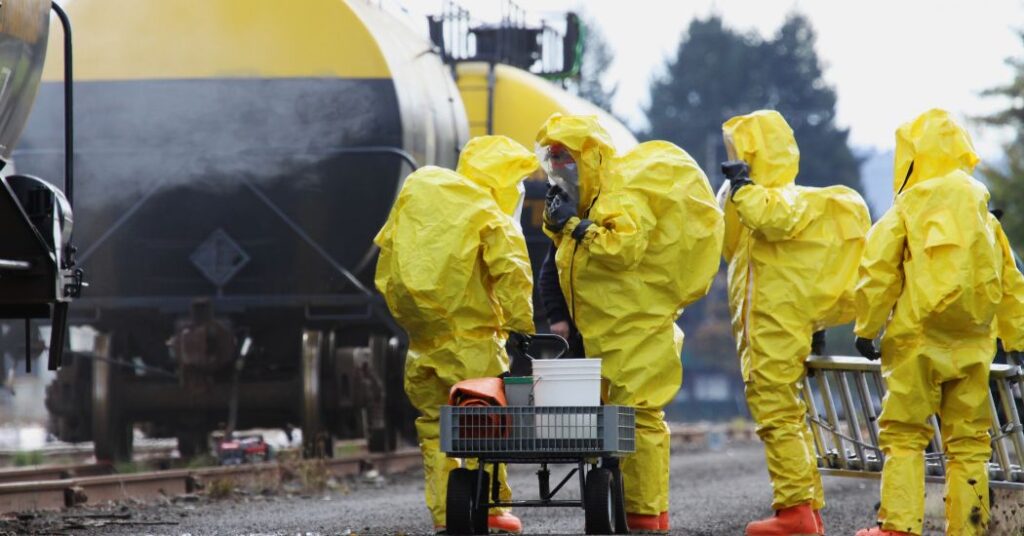
Hazardous materials are present in more Malaysian workplaces than most employers realise. From chemical manufacturing plants in Pasir Gudang to laboratories in Kuala Lumpur, from oil and gas facilities in Terengganu to hospital pharmacies across the country the risks associated with hazardous materials (HAZMAT) are real, regulated, and require trained personnel to manage safely.
Yet HAZMAT training in Malaysia remains one of the most misunderstood areas of workplace safety. Many companies either underestimate their HAZMAT exposure, delay training because they are unsure who needs it, or are simply unaware that certified training is a legal and operational requirement for certain industries.
This guide explains what HAZMAT training involves, which industries and roles require it, what Malaysian law says about hazardous materials management, and how to get your team trained and certified.
What does HAZMAT mean?
HAZMAT stands for Hazardous Materials any substance or material that poses a risk to health, safety, property, or the environment when improperly handled, transported, stored, or disposed of.
In the Malaysian workplace context, HAZMAT covers a broad range of substances, including:
- Flammable liquids and gases — fuel, solvents, LPG, acetylene
- Corrosive chemicals — acids, alkalis, industrial cleaning agents
- Toxic substances — pesticides, heavy metals, industrial chemicals
- Reactive materials — oxidisers, peroxides, unstable compounds
- Biological hazards — infectious waste, laboratory specimens, medical waste
- Radioactive materials — used in certain medical and industrial applications
- Compressed gases — oxygen, nitrogen, chlorine cylinders
When any of these materials are involved in an accident — a spill, leak, fire, or explosion — the consequences can be catastrophic without trained personnel on-site who know how to respond. That is precisely why HAZMAT training exists.
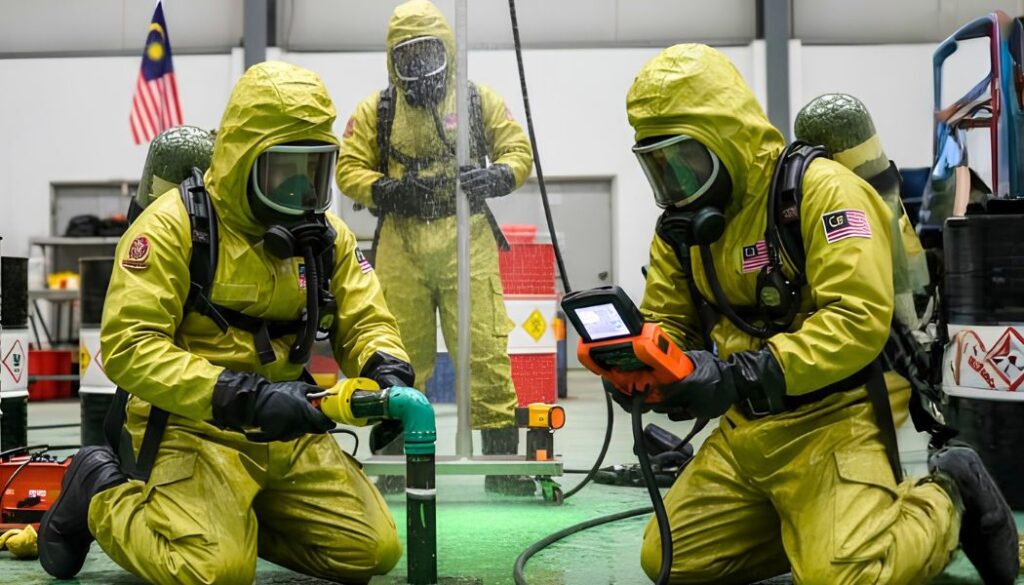
Why is HAZMAT training important in Malaysia?
Malaysia’s industrial landscape makes HAZMAT competency more critical here than in many other countries. Johor’s Pasir Gudang corridor, Selangor’s Shah Alam and Port Klang industrial zones, Penang’s manufacturing belt, and the petrochemical clusters along the east coast all handle significant volumes of hazardous materials on a daily basis.
The consequences of inadequate HAZMAT preparedness are well-documented. Industrial incidents involving chemical spills, toxic gas releases, and HAZMAT-related fires have occurred across Malaysian industrial zones — causing injuries, fatalities, environmental damage, and significant operational and reputational losses for the companies involved.
Beyond the human and environmental cost, there is a legal dimension. Malaysian law places clear obligations on employers who handle hazardous substances. Failure to ensure that workers are trained in HAZMAT procedures can result in enforcement action by the Department of Occupational Safety and Health (DOSH), Jabatan Bomba dan Penyelamat Malaysia (JBPM), and the Department of Environment (DOE).
For current regulatory guidance on hazardous materials management in Malaysia, refer to the official Jabatan Bomba dan Penyelamat Malaysia website.
What does Malaysian law say about HAZMAT training?
Several pieces of Malaysian legislation govern the handling, storage, transportation, and disposal of hazardous materials. The key regulatory frameworks include:
Occupational Safety and Health Act 1994 (OSHA)
OSHA places a general duty on employers to provide a safe working environment, including adequate training for employees who work with or near hazardous substances. Under OSHA, ignorance of a hazard is not a defence — employers are responsible for identifying risks and training their workforce accordingly.
Factories and Machinery Act 1967
This act covers factories that use or store hazardous substances, requiring proper handling procedures, safety equipment, and trained personnel. Many manufacturing facilities in Malaysia fall under this act and its associated regulations.
Environmental Quality Act 1974
Governs the disposal and management of scheduled wastes — including many chemical and industrial by-products classified as HAZMAT. Companies that generate, handle, or transport scheduled wastes must comply with DOE requirements, which include staff training and proper documentation.
Fire Services Act 1988 (Act 341)
Premises that store or handle flammable, explosive, or otherwise dangerous materials are subject to additional fire safety requirements under this act, enforced by JBPM. This includes designated fire safety personnel — FSM and FSO — who understand the specific HAZMAT risks present in the facility.
Key point: HAZMAT training does not sit under a single law in Malaysia. It sits at the intersection of OSHA, environmental law, fire services regulations, and industry-specific codes. This is why a comprehensive HAZMAT training programme — not just a basic awareness session — is essential for companies with real HAZMAT exposure.
Who needs HAZMAT training in Malaysia?
HAZMAT training is not limited to employees who directly handle chemicals. Anyone who works in proximity to hazardous materials, responds to HAZMAT incidents, or manages facilities where HAZMAT is present should be trained. Specifically:
Employees who directly handle hazardous materials
This is the most obvious group — production line workers, laboratory technicians, chemical handlers, and warehouse staff who physically work with hazardous substances on a daily basis. These employees need hands-on training in safe handling procedures, personal protective equipment (PPE), and emergency response.
Emergency Response Team (ERT) members
ERT personnel are the first internal responders to any workplace incident — including HAZMAT spills, chemical releases, and fire events involving hazardous substances. Without HAZMAT training, ERT members risk becoming casualties themselves when responding to an incident.
Fire Safety Managers (FSM) and Fire Safety Officers (FSO)
In facilities where HAZMAT is present, the FSM and FSOs need to understand the specific hazards in their environment — not just general fire safety principles. This knowledge shapes the Fire Safety Management Plan (FSMP), emergency response procedures, and the type of suppression equipment deployed. For more on the FSM and FSO roles, read our guide on FSM and FSO training in Malaysia.
Supervisors and team leaders
Anyone in a supervisory role within a HAZMAT environment needs sufficient training to recognise hazards, enforce safe work procedures, and make correct decisions during an incident — including when to evacuate, when to contain, and when to call for external emergency response.
Transport and logistics personnel
Employees involved in transporting dangerous goods — whether by road, sea, or air — are subject to specific HAZMAT regulations governing labelling, documentation, packaging, and emergency procedures during transit.
Health, Safety and Environment (HSE) officers
HSE officers working in HAZMAT-exposed environments need advanced HAZMAT competency to conduct risk assessments, develop safe work procedures, investigate incidents, and maintain regulatory compliance documentation.
Which industries in Malaysia require HAZMAT training?
While HAZMAT training is beneficial across many sectors, it is particularly critical — and in many cases legally required — in the following industries:
| Industry | Common HAZMAT Exposure |
| Oil and gas | Flammable hydrocarbons, toxic gases (H₂S), pressurised systems |
| Chemical manufacturing | Acids, alkalis, reactive compounds, solvents |
| Petrochemicals | Crude oil derivatives, chlorine, ammonia, LPG |
| Electronics manufacturing | Etching chemicals, solvents, lead compounds |
| Pharmaceuticals | Active pharmaceutical ingredients, solvents, biological agents |
| Healthcare | Infectious waste, sharps, cytotoxic materials, compressed gases |
| Logistics and warehousing | Dangerous goods in transit, mixed chemical storage |
| Agriculture | Pesticides, herbicides, fertilisers, fumigants |
| Construction | Adhesives, solvents, asbestos (in older structures), lead paint |
| Automotive | Battery acid, lubricants, hydraulic fluids, paint solvents |
For companies in Johor’s Pasir Gudang corridor — one of Malaysia’s most HAZMAT-intensive industrial zones — HAZMAT training is particularly critical. The area hosts significant concentrations of petrochemical, chemical manufacturing, and industrial processing operations, all of which require well-trained personnel capable of managing HAZMAT risks on a daily basis.
What Does A HAZMAT Training Programme Cover?
A comprehensive HAZMAT training programme goes well beyond basic chemical awareness. At AFSA Academy, our HAZMAT training is designed to build genuine competency — from hazard recognition to emergency response — in a practical, scenario-based format relevant to Malaysian industrial environments.
Module 1: Introduction to hazardous materials
Classification of HAZMAT categories, the UN hazard classification system, globally harmonised system (GHS) labels and Safety Data Sheets (SDS). Participants learn how to read and interpret HAZMAT documentation correctly.
Module 2: Malaysian regulatory framework
Overview of OSHA, the Environmental Quality Act, the Fire Services Act, and DOE scheduled waste regulations as they apply to HAZMAT management. Participants understand their legal obligations and the consequences of non-compliance.
Module 3: HAZMAT risk assessment
How to identify HAZMAT hazards in the workplace, assess exposure risk, and implement appropriate control measures. Participants apply risk assessment methodology to their own workplace scenarios.
Module 4: Safe handling and storage procedures
Correct techniques for handling, storing, and transporting different classes of hazardous materials — including segregation requirements, container labelling, ventilation needs, and temperature controls.
Module 5: Personal protective equipment (PPE)
Selection, use, maintenance, and disposal of PPE appropriate to different HAZMAT classes. Includes hands-on practice with respiratory protection, chemical-resistant suits, gloves, and eye protection.
Module 6: HAZMAT spill and leak response
Step-by-step response procedures for chemical spills and releases — including initial assessment, containment, decontamination, notification procedures, and documentation. Practical exercises using real spill scenarios.
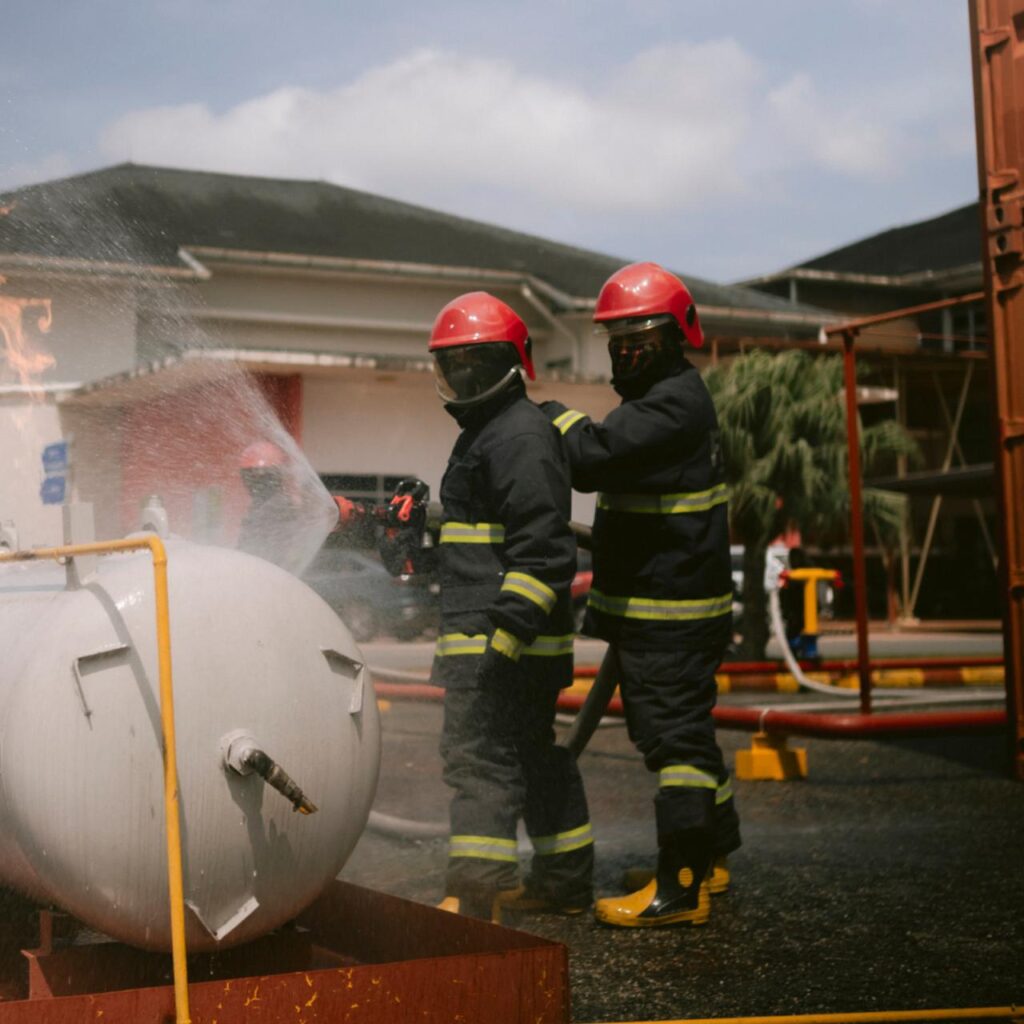
Module 7: HAZMAT firefighting and emergency response
How fire behaves differently when hazardous materials are involved, the risks of fighting HAZMAT fires, when to fight and when to evacuate, and how to coordinate with JBPM’s HAZMAT response unit during a major incident.
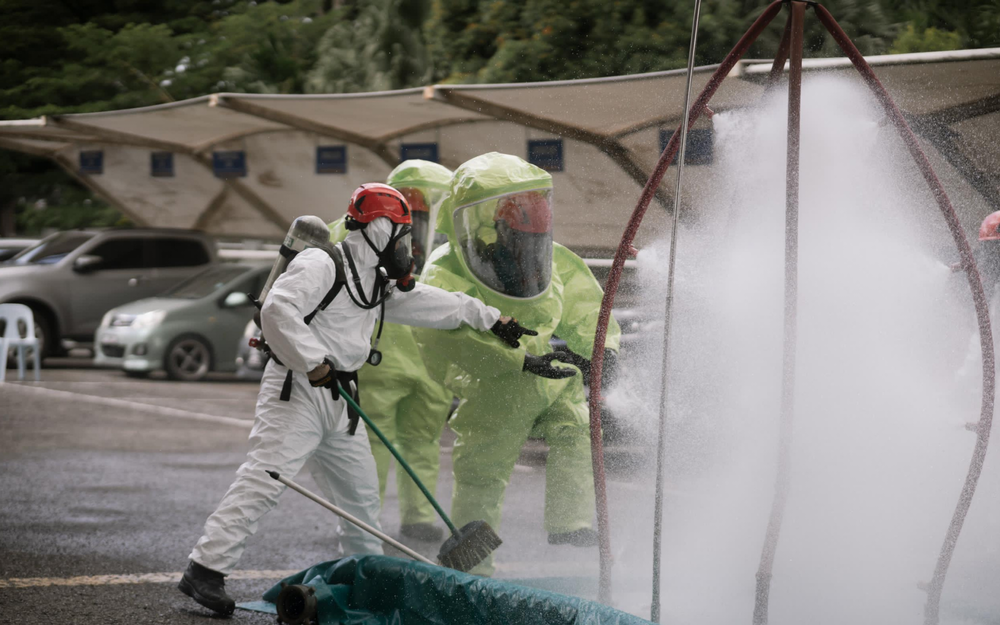
Module 8: Decontamination procedures
Setting up and operating a decontamination corridor, gross and secondary decontamination techniques, and proper disposal of contaminated materials and PPE in compliance with DOE requirements.
Module 9: Practical assessment and certification
All participants complete a written examination and a practical competency assessment. Those who pass receive their HAZMAT certification, recognised by industry and relevant regulatory authorities.
Is HAZMAT training HRD Corp claimable?
Yes. AFSA Academy is a registered HRD Corp training provider, and our HAZMAT training programme is eligible for SBL-Khas claims through the HRD Corp levy fund. This means Malaysian employers can have their HAZMAT training costs fully or significantly covered through their existing HRD Corp contributions.
For companies in high-HAZMAT industries — particularly those in Johor, Selangor, and Penang — this makes certified HAZMAT training one of the most cost-effective safety investments available. The SBL-Khas application must be submitted and approved through the HRD Corp portal before training begins. Our team will guide you through the process when you register.
HAZMAT Training and Fire Safety: How They Connect
HAZMAT training and fire safety training are closely linked — particularly in industrial environments where hazardous materials and fire risk coexist. Many HAZMAT incidents involve fire, and many fire incidents involve HAZMAT. A well-prepared workplace needs competency in both areas.
For companies that already have certified FSMs and FSOs, adding HAZMAT training to the same team creates a more complete and capable emergency response capability. The FSM’s Fire Safety Management Plan should already account for HAZMAT risks on-site — but without HAZMAT-trained personnel to execute the relevant procedures, that plan remains theoretical.
If your team has not yet completed FSM and FSO training, our comprehensive fire safety compliance checklist is a useful starting point to understand your full compliance obligations before adding HAZMAT training to the picture.
For a comparison of HAZMAT training providers in Malaysia, you may also refer to FERA Training Centre as another registered provider offering fire and safety-related programmes.
Frequently Asked Questions
Is HAZMAT training mandatory for all companies in Malaysia?
Not for all companies — but it is effectively mandatory for any organisation that handles, stores, transports, or disposes of hazardous substances as defined under OSHA, the Environmental Quality Act, or the Fire Services Act. If your company works with chemicals, dangerous goods, flammable materials, or scheduled wastes, HAZMAT training is a legal and operational necessity.
How long does HAZMAT training take at AFSA Academy?
Our standard HAZMAT training programme runs over two to three days, combining classroom instruction with practical hands-on exercises. Duration may vary depending on the complexity of the hazards present at your specific workplace and the level of certification required.
Can HAZMAT training be conducted at our premises?
Yes. AFSA Academy offers in-house HAZMAT training at client premises. This is particularly effective for industrial sites where participants can practise response procedures in their actual working environment. Contact us to discuss a tailored in-house programme for your team.
Do our FSOs need separate HAZMAT training?
If your premises handles hazardous materials, yes — FSO certification alone does not cover HAZMAT-specific procedures. FSOs in HAZMAT environments benefit significantly from additional HAZMAT training, particularly for spill response, PPE use, and JBPM HAZMAT unit coordination.
What is the difference between HAZMAT training and a chemical safety briefing?
A chemical safety briefing is a general awareness session — useful for all employees but insufficient for those with specific HAZMAT roles. HAZMAT training is a structured, competency-based programme that builds the practical skills needed to safely handle, respond to, and manage hazardous material incidents. Certified HAZMAT training produces documentation that employers can present to DOSH, JBPM, or DOE auditors as evidence of compliance.
Get your team HAZMAT certified with AFSA Academy
Whether your company handles chemicals daily or occasionally works near hazardous materials, having certified HAZMAT personnel is a critical layer of protection — for your employees, your operations, and your regulatory standing.
At AFSA Academy, our HAZMAT training programme is practical, scenario-driven, and built around the real hazards faced by Malaysian industrial workers. Our facility in Pasir Gudang, Johor puts us at the heart of Malaysia’s most HAZMAT-intensive industrial corridor — and our instructors bring real emergency response experience to every session.
Call or WhatsApp: +6012-612 0893
Email: [email protected]
Location: Politeknik Ibrahim Sultan, Pasir Gudang, Johor
Contact AFSA Academy to register your team for HAZMAT training or to request a corporate training proposal for your organisation.