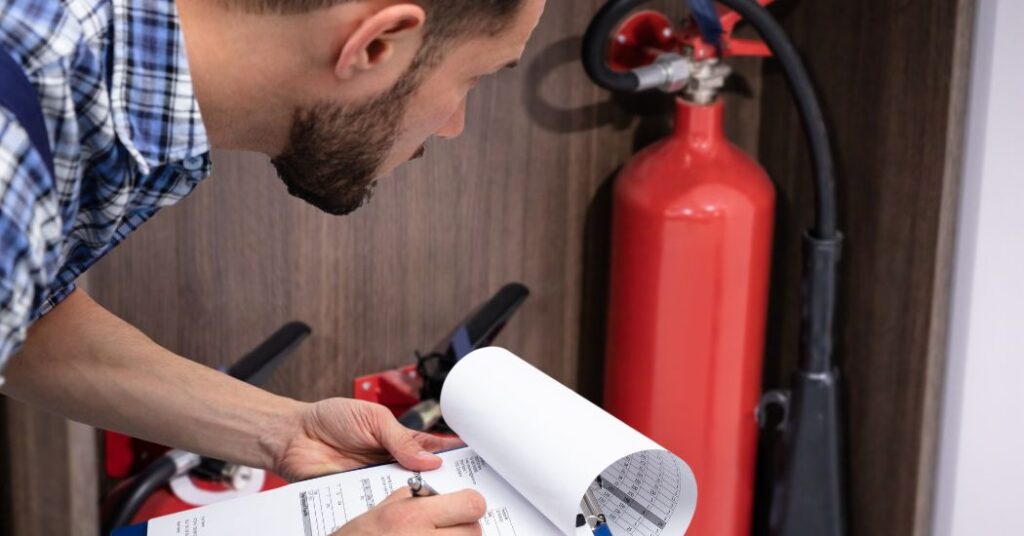
Fire safety compliance in Malaysia is not a one-time exercise. It is an ongoing responsibility that touches every level of your organisation — from the Fire Safety Manager (FSM) who oversees the entire system, to the Fire Safety Officers (FSO) conducting daily zone inspections, to the fire wardens who guide colleagues during an evacuation.
Yet for many Malaysian employers, the question remains: exactly what does compliance look like in practice? What does JBPM actually look for during an audit? What documentation must be in place? And how do you know if your company is genuinely compliant — not just on paper?
This article provides a practical fire safety compliance checklist for Malaysian employers, structured around the key requirements that JBPM enforces for designated premises nationwide.
Who does this checklist apply to?
This checklist is relevant for any premises classified as a designated premises under the Fire Services (Designated Premises) Order 1998. If your premises holds or requires a Fire Certificate from Jabatan Bomba dan Penyelamat Malaysia (JBPM), this checklist applies to you.
Designated premises include factories, warehouses, high-rise buildings, hospitals, hotels, shopping complexes, educational institutions, and premises storing dangerous goods. For the full list of designated premises categories and current compliance requirements, refer to the official Jabatan Bomba dan Penyelamat Malaysia website.
Even if your premises is not classified as designated, adopting this checklist as a baseline is still considered best practice — particularly for companies in manufacturing, logistics, oil and gas, and construction sectors.
Section 1: Fire Safety Organisation (OKK) compliance
The Organisasi Keselamatan Kebakaran (OKK) is the internal fire safety committee that every designated premises must establish and maintain. Since the Fire Services (Fire Certificate) Amendment Regulations 2020, proof of OKK establishment is a mandatory condition for Fire Certificate issuance and renewal.
OKK checklist
- One certified FSM appointed — holds valid JBPM-recognised FSM certification, not expired
- Minimum three certified FSOs appointed — each holds valid FSO certification from a JBPM-approved provider
- Fire wardens assigned per floor or zone — responsible for headcount and evacuation guidance in their area
- Emergency Response Team (ERT) established — trained for first response, first aid, and evacuation coordination
- OKK structure documented — organisation chart with names, roles, and contact numbers on file
- OKK appointment letters issued — signed letters of appointment for FSM, all FSOs, and ERT members
- OKK meeting records maintained — minutes of regular OKK meetings available for JBPM review
- All certifications are current — FSM and FSO certificates valid for 3 years; renewal tracked and scheduled
Common gap: Many companies have certified personnel but cannot produce the appointment letters or OKK meeting minutes during an audit. JBPM auditors expect documentation, not just verbal confirmation that roles have been assigned.
Section 2: Fire Safety Management Plan (FSMP) compliance
The Fire Safety Management Plan (FSMP) is the central document of your fire safety system. It is prepared by the FSM and must be reviewed annually or whenever there are significant changes to the premises such as renovation, change of occupancy, or expansion.
FSMP checklist
- FSMP document prepared and in place — covers all fire safety systems, procedures, and responsibilities
- Emergency contacts and escalation procedures documented — includes JBPM hotline, nearest fire station, and internal chain of command
- Evacuation routes and assembly points clearly identified — mapped in the FSMP and displayed throughout the premises
- FSMP reviewed within the last 12 months — or after any structural or operational changes to the premises
- FSMP accessible to JBPM auditors — stored and retrievable on-site at all times
- All staff aware of the FSMP’s key procedures — particularly evacuation routes and assembly points relevant to their zone
Preparing a compliant FSMP is one of the core competencies taught in FSM training. If your current FSM has not been formally trained, the FSMP they have produced may not meet JBPM standards. For more information on what FSM training covers, visit our FSM and FSO training page.
Section 3: Fire drill and emergency response compliance
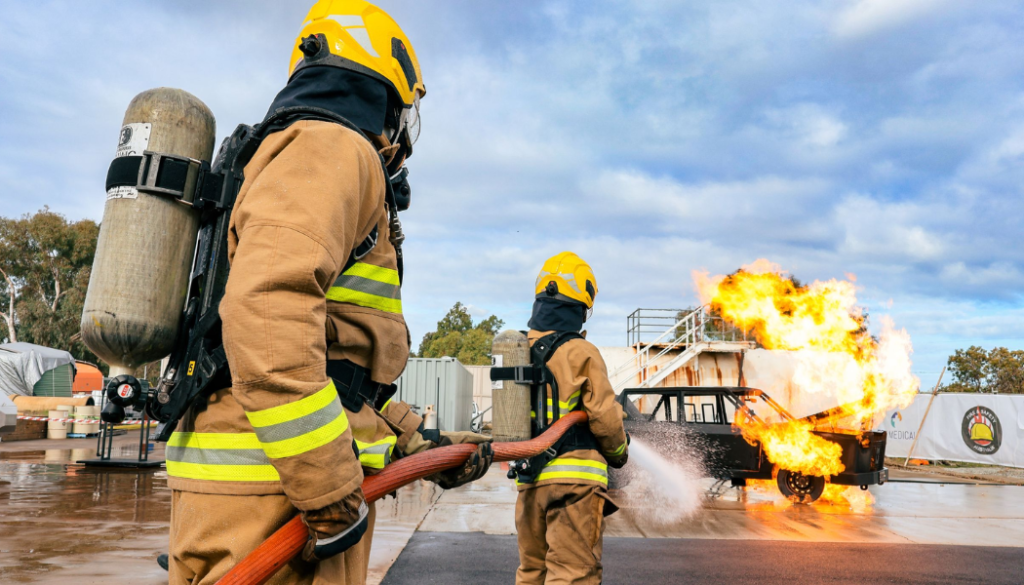
Conducting fire drills is not optional it is a mandatory requirement under JBPM regulations. The purpose of a fire drill is to test whether your evacuation procedures actually work and to identify gaps before a real emergency occurs.
Fire drill checklist
- Minimum one fire drill conducted per year — involving all occupants of the premises, not just a selected group
- Fire drill records maintained — date, time, number of participants, evacuation time, and observations documented
- Post-drill debrief conducted — findings reviewed with OKK members and corrective actions assigned
- Emergency Response Plan (ERP) tested — tabletop or live exercises conducted to validate ERP procedures
- Evacuation time benchmarked — compared against previous drills to measure improvement
- Special needs occupants accounted for — procedures in place for employees or visitors with mobility limitations
Important: JBPM auditors will ask to see fire drill records during inspections. A drill that was conducted but not documented is treated the same as a drill that was never conducted. Always record the date, participation count, and duration immediately after every drill.
Section 4: Fire safety equipment compliance
Having fire safety equipment installed is only half the requirement. The other half is ensuring that equipment is regularly inspected, serviced, and documented — so that it is guaranteed to function when needed.
Equipment checklist
- Fire extinguishers in place and tagged — correct type for the fire risk in each area, service tag updated within 12 months
- Fire alarm system tested and functional — annual testing by a certified contractor, records on file
- Sprinkler system inspected — serviced and tested regularly, no blocked or damaged heads
- Smoke detectors functional — tested and replaced as required, no disconnected units
- Emergency lighting operational — tested monthly, battery backup confirmed functional
- Fire hose reels accessible and serviceable — not blocked, no leaks, pressure tested
- Fire exit signs illuminated — visible from all areas of the premises, not obstructed
- All fire exits clear and accessible — no storage, no locked doors, no obstructions of any kind
- Equipment inspection logs maintained on-site — available for JBPM review at any time
Section 5: Fire Certificate and legal document compliance
Beyond the operational aspects of fire safety, there are specific legal documents that designated premises must maintain in order to comply with JBPM requirements.
Legal document checklist
- Valid Fire Certificate displayed on-site — current, not expired, issued by JBPM
- Fire Certificate renewal submitted on time — renewal process initiated well before expiry date
- Certificate of Fitness for Occupation (CFO) valid — particularly relevant for building owners and developers
- FSM and FSO appointment letters filed — signed by management, copies available for JBPM
- All FSM and FSO certifications valid and on file — not expired, from JBPM-approved providers
- Incident reports filed where applicable — any fire-related incident, false alarm, or near-miss documented and reported to JBPM as required
Section 6: Staff awareness and training compliance
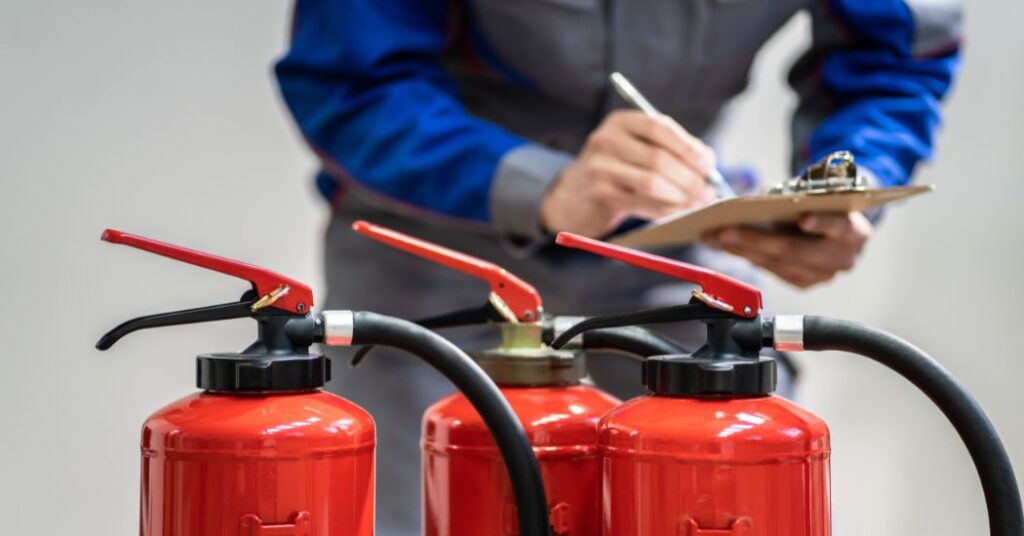
Compliance is not just about systems and documents — it is also about people. Every employee who works in a designated premises should have a basic level of fire safety awareness, even if they are not formally appointed as an FSO or fire warden.
Staff training checklist
- ✅ All staff briefed on evacuation routes and assembly points — particularly new employees during onboarding
- ✅ Fire warden training completed for all designated floor wardens — including how to conduct a headcount and report to the FSO
- ✅ Basic fire extinguisher usage demonstrated to relevant staff — practical demonstration, not just a briefing slide
- ✅ FSO refresher awareness conducted within the team — regular reminders about fire hazards relevant to the work environment
- ✅ New FSOs certified within required timeframe after appointment — not operating in the FSO role without valid certification
- ✅ FSM certification renewal planned before expiry — tracked and scheduled, not left to lapse
If any of your appointed FSOs or FSMs require certification or renewal, our team at AFSA Academy can arrange training at our Pasir Gudang facility or at your premises. You may also compare programme options with other registered providers such as FERA Training Centre before deciding.
What happens during a JBPM fire safety audit?
Understanding what a JBPM auditor looks for helps you prepare more effectively. During a fire safety audit or Fire Certificate inspection, JBPM officers typically review:
| Audit Area | What JBPM Checks |
| OKK establishment | Appointment letters, certified FSM and FSO credentials, organisation chart |
| FSMP documentation | Up-to-date plan, signed and reviewed within 12 months |
| Fire drill records | At least one documented drill per year with participation data |
| Equipment condition | Physical inspection of extinguishers, exits, alarms, sprinklers, and lighting |
| Equipment service records | Service tags, contractor invoices, and inspection logs on file |
| Fire Certificate validity | Current certificate displayed, renewal application submitted if near expiry |
| Evacuation routes | Signage visible and unobstructed, exits clear and functional |
If any of these areas are found to be non-compliant during an audit, JBPM has the authority to issue a notice of non-compliance, require corrective action within a specified timeframe, or in serious cases issue a stop-work notice until compliance is achieved.
How to use this checklist to prepare for your next JBPM audit
The most effective way to use this checklist is to treat it as a self-audit tool — ideally conducted at least two to three months before a scheduled Fire Certificate renewal or an anticipated JBPM inspection.
Here is a practical approach:
- Assign the self-audit to your FSM. The FSM is responsible for fire safety compliance across the entire premises. Reviewing this checklist against your current state is a core part of their role.
- Walk through each section with your FSOs. FSOs can verify the operational items equipment condition, exit accessibility, drill records from their zone-level perspective.
- Identify gaps and assign corrective actions. For each item that is not yet in place, assign a responsible person and a completion deadline.
- Address certification gaps immediately. If any FSM or FSO certifications have expired or are approaching expiry, arrange renewal training as soon as possible. Lapsed certifications are one of the most common reasons for Fire Certificate rejection.
- Document everything. JBPM audits are evidence-based. Every corrective action taken should be recorded and filed.
For a full overview of what FSM and FSO certification involves and how to get your team trained, read our guide on the difference between FSM and FSO in Malaysia.
Frequently asked questions
How often should we conduct a fire safety self-audit?
At minimum, once a year ideally aligned with your Fire Certificate renewal cycle. However, best practice is to conduct a lighter monthly check on equipment and exits, a quarterly review of documentation, and a full self-audit annually before your JBPM inspection.
Can our FSM conduct the self-audit, or do we need an external party?
Your FSM is the most appropriate person to lead the internal self-audit. However, for a more objective assessment — particularly before a high-stakes JBPM renewal — engaging an external fire safety consultant or trainer to review your compliance posture is a worthwhile investment.
What is the most common reason Malaysian companies fail JBPM audits?
Based on industry experience, the most common failures are: expired FSM or FSO certifications, missing or outdated FSMP documentation, no fire drill records, and blocked fire exits. All four are preventable with proper planning and a certified FSM managing the system.
Does our company need to display the Fire Certificate publicly?
Yes. Valid Fire Certificates must be displayed prominently on the premises typically near the main entrance or reception area where JBPM officers and building occupants can verify it.
How do we get started if our company has no FSM or FSO in place at all?
Start by enrolling your most senior safety-responsible person in FSM training as soon as possible. At the same time, identify at least three employees for FSO training. AFSA Academy offers both programmes and can arrange combined intakes. Contact us to discuss the fastest path to compliance for your team.
Get audit-ready with AFSA Academy
Whether you are preparing for your first Fire Certificate application, approaching a renewal, or simply want to make sure your company is genuinely compliant this checklist gives you a clear picture of where you stand and what needs to be done.
If your team needs FSM or FSO certification or if existing certifications are approaching their three-year expiry AFSA Academy offers JBPM-recognised, HRD Corp claimable training at our facility in Pasir Gudang, Johor, and at client premises across Malaysia.
Call or WhatsApp: +6012-612 0893
Email: [email protected]
Location: Politeknik Ibrahim Sultan, Pasir Gudang, Johor
Contact AFSA Academy to register your team or request a corporate training proposal for your organisation.