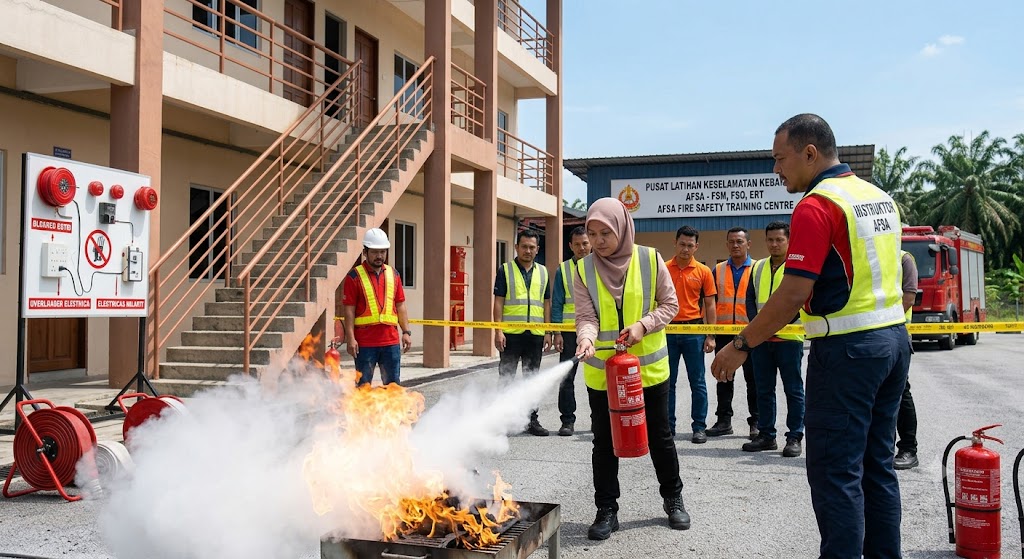
Are you responsible for fire safety at your workplace? Whether you manage a factory, office building, hospital, or commercial complex, Malaysian law requires trained and certified fire safety personnel on-site. That is where FSM and FSO training comes in.
In this guide, we break down what Fire Safety Manager (FSM) and Fire Safety Officer (FSO) training involves, who needs it, what the law says, and how to get certified in Malaysia.
What Is a Fire Safety Manager (FSM)?
A Fire Safety Manager (FSM) is a senior-level safety professional responsible for overseeing fire safety management across an entire premises or organisation. The FSM is accountable for:
- Developing and implementing the Fire Safety Management Plan (FSMP)
- Ensuring all fire safety equipment is inspected and maintained
- Conducting regular fire risk assessments
- Coordinating fire drills and emergency evacuation exercises
- Liaising with the Jabatan Bomba dan Penyelamat Malaysia (JBPM) during audits and inspections
- Training and supervising Fire Safety Officers on-site
The FSM role carries significant legal responsibility. Under the Fire Services Act 1988 (Act 341) and its associated regulations, premises owners and occupiers must ensure that qualified personnel are appointed to manage fire safety on their behalf.
What Is a Fire Safety Officer (FSO)?
A Fire Safety Officer (FSO) operates at the operational level, working directly with staff to enforce fire safety practices on the ground. The FSO’s key responsibilities include:
- Conducting fire safety inspections of all zones within the premises
- Maintaining fire safety records and logs
- Assisting in the preparation and testing of emergency response procedures
- Educating employees on fire safety awareness and evacuation routes
- Reporting findings and non-compliances to the Fire Safety Manager
- Responding to fire incidents during the initial stage before the fire brigade arrives
In most organisations, there will be one FSM overseeing multiple FSOs. Together, they form the backbone of any workplace fire safety system.
Why FSM and FSO Certification Matters in Malaysia
Legal Requirement Under Malaysian Law
Fire safety compliance in Malaysia is governed primarily by the Fire Services Act 1988, enforced by the Jabatan Bomba dan Penyelamat Malaysia (JBPM). Under this framework, certain categories of premises — including high-rise buildings, factories, hospitals, shopping complexes, and educational institutions — are legally required to appoint certified FSMs and FSOs.
Failure to comply can result in:
- Stop-work notices issued by JBPM
- Heavy fines and legal penalties
- Loss of Sijil Layak Menduduki (CFO) — the certificate required to legally occupy a building
- Criminal liability in the event of a fire incident
For the latest enforcement updates and compliance guidelines from the national fire authority, you can refer to the official Jabatan Bomba dan Penyelamat Malaysia website.
Growing Industry Demand
Malaysia’s rapid industrial growth — particularly in sectors like manufacturing, oil and gas, logistics, and construction — has driven a sharp increase in demand for certified fire safety professionals. Companies that undergo FSM and FSO training are not only meeting regulatory requirements; they are also building a safer, more resilient workforce.
Who Should Attend FSM and FSO Training?
FSM training is best suited for:
- Safety and Health Officers (SHOs)
- Operations Managers and Facility Managers
- Building Management staff
- HSE (Health, Safety and Environment) personnel
- Industrial plant managers
FSO training is ideal for:
- Floor wardens and safety committee members
- Supervisors in manufacturing or industrial environments
- Security officers in commercial premises
- Administrative staff designated as fire wardens
- Any employee with a fire safety role within their organisation
There are no strict academic prerequisites to attend most FSO programmes. However, FSM candidates are typically expected to have prior work experience in a safety-related role or hold a relevant professional qualification.
What Does FSM and FSO Training Cover?
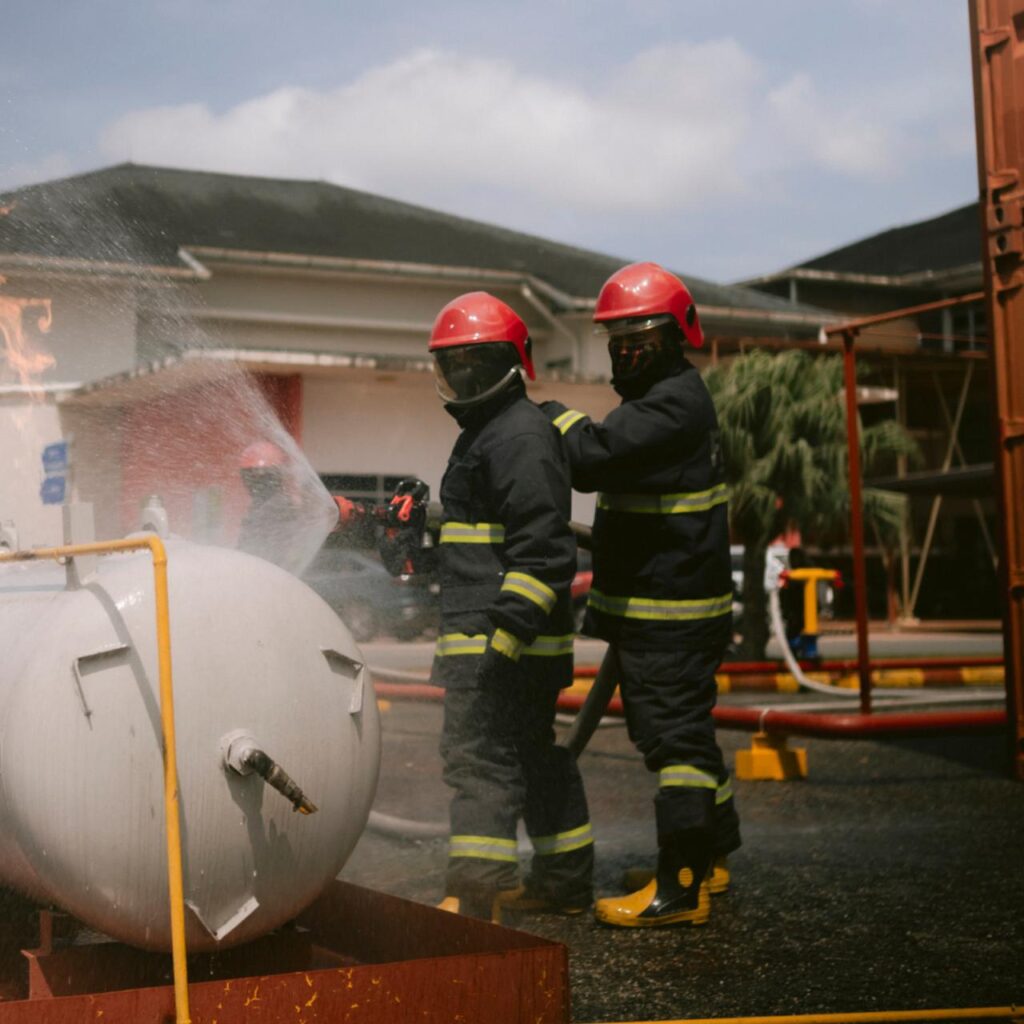
A comprehensive FSM and FSO programme covers both theoretical knowledge and practical hands-on application. At AFSA Academy, our training curriculum includes:
Module 1: Fire Science and Behaviour
Understanding how fires start, spread, and can be controlled. This includes combustion theory, fire triangle, flashover, and backdraft scenarios relevant to Malaysian industrial environments.
Module 2: Malaysian Fire Safety Legislation
Deep-dive into the Fire Services Act 1988, Uniform Building By-Laws (UBBL), and JBPM compliance requirements. Participants learn how to read and apply regulatory guidelines in real-world settings.
Module 3: Fire Risk Assessment
Step-by-step methodology for identifying fire hazards, evaluating risks, and implementing control measures. Practical exercises using real building layouts are included.
Module 4: Fire Safety Systems and Equipment
Hands-on familiarisation with fire suppression systems, smoke detectors, alarm panels, fire extinguishers, sprinkler systems, and emergency lighting. Participants learn how to inspect, test, and maintain these systems.
Module 5: Emergency Response Planning
How to build a site-specific Emergency Response Plan (ERP), conduct tabletop exercises, and lead live evacuation drills. FSM candidates practise coordinating multi-department emergency scenarios.
Module 6: Fire Safety Management Plan (FSMP) — For FSM
A dedicated module for FSM candidates covering how to write, implement, and maintain a complete FSMP document in line with JBPM requirements.
Module 7: Practical Assessment and Certification
All participants undergo a practical competency assessment and written examination. Successful candidates receive their FSM or FSO certification, recognised by industry and regulatory bodies.
======
How Long Is the Training?
| Programme | Duration | Mode |
| Fire Safety Officer (FSO) | 2–3 Days | Classroom + Practical |
| Fire Safety Manager (FSM) | 5 Days | Classroom + Practical |
| Combined FSM & FSO | 5–6 Days | Classroom + Practical |
Training is conducted at AFSA Academy’s facility at Politeknik Ibrahim Sultan, Pasir Gudang, Johor — a purpose-built training centre equipped with live fire simulation areas and industry-grade safety equipment.
Is FSM and FSO Training HRD Corp Claimable?
Yes. AFSA Academy is a registered HRD Corp Training Provider, which means Malaysian employers can claim the full training fee through their HRD Corp (formerly HRDF) levy fund.
This makes FSM and FSO certification accessible to companies of all sizes, including SMEs that may be concerned about training costs. Companies can register their employees, submit the SBL-Khas claim, and have the training fully or partially funded.
FSM vs FSO: What Is the Difference?
| Criteria | Fire Safety Manager (FSM) | Fire Safety Officer (FSO) |
| Level | Strategic / Management | Operational / Ground Level |
| Scope | Entire premises or organisation | Specific zones or departments |
| Key Responsibility | Fire Safety Management Plan | Day-to-day fire safety enforcement |
| Training Duration | 5 days | 2–3 days |
| Who Appoints Them | Building owner / top management | FSM or building manager |
| Regulatory Requirement | Mandatory for high-risk premises | Required for designated fire zones |
Both roles are complementary — effective fire safety management depends on strong coordination between the FSM and all deployed FSOs.
Why Choose AFSA Academy for FSM and FSO Training?
AFSA Academy is a professional fire safety training centre based in Pasir Gudang, Johor. Here is what sets our programme apart:
- Experienced Instructors — Our training team includes certified firefighters and industry practitioners with real-world emergency response experience
- Hands-On Learning — We use scenario-based simulations, not just classroom lectures
- HRD Corp Registered — Your company can claim training costs through the national levy fund
- Updated Curriculum — Our syllabus is aligned with current JBPM requirements and Malaysian safety standards
- Strategic Location — Based at Politeknik Ibrahim Sultan, Pasir Gudang, serving Johor and southern Malaysia
For a broader look at fire safety training standards and certified providers in Malaysia, you may also refer to FERA Training Centre’s FSM and FSO programme, another registered provider committed to professional fire safety education.
Frequently Asked Questions (FAQ)
Is FSM or FSO certification mandatory for my company?
It depends on your premises type and occupancy. High-rise buildings, factories, hospitals, and commercial complexes generally require certified FSM and FSO appointments. Check with JBPM or contact us for a compliance assessment.
Does my FSO certification expire?
Most certifications are valid for a defined period and require renewal training. We advise participants to renew every 3 years or as required by JBPM.
Can I attend FSO training without prior experience?
Yes. FSO training is designed for participants with no formal fire safety background. No prior certification is required to enrol.
Do you offer in-house or corporate training?
Yes. AFSA Academy provides corporate fire safety training tailored to your industry, team size, and site-specific requirements. Contact us to discuss a customised programme.
Where is AFSA Academy located?
We are located at Politeknik Ibrahim Sultan, Pasir Gudang, Johor. We also conduct in-house training at client premises across Johor and other states upon request.
Take the Next Step Towards Fire Safety Compliance
Whether you are looking to certify a key employee, train your entire safety team, or fulfil your company’s regulatory obligations, AFSA Academy has the right programme for you.
For further details on safety standards and emergency response, check out the AFSA ERT Competency Training program.
Our FSM and FSO courses are practical, compliance-ready, and delivered by professionals who have worked in real emergency environments.
Call or WhatsApp: +6012-612 0893
Email: [email protected]
Location: Politeknik Ibrahim Sultan, Pasir Gudang, Johor
Contact AFSA Academy to register for the next FSM or FSO training session.